
Burnout
Burnout or tiredness: how to tell the difference
«I rested all weekend — why am I drained again?» A familiar thought, and a good reason to look at what’s going on instead of blaming laziness. Tiredness and burnout look similar on the outside, but inside they’re different processes: one is a flat battery that sleep recharges; the other is when the «charger» stops working — with burnout, rest doesn’t refill resource as quickly as with ordinary tiredness.
You’ll learn how to tell burnout from ordinary tiredness, what happens in the nervous system, and what you can do today. For symptoms and stages in full, see the burnout page.

Contents
Key points
Tiredness: when the battery is just low
Ordinary tiredness is the normal price your body pays for load. You worked hard, slept little, stressed before a deadline — by evening you’re empty. You go to bed, sleep in, and on Monday you can cope again.
Think of a phone: 15% by evening, you plug it in — 100% by morning. The brain works the same way, except the «batteries» are tiny power plants inside cells: mitochondria. They produce adenosine triphosphate (ATP) — literal fuel neurons use to think, decide, and feel.
Mitochondria work like mini power stations: glucose + oxygen → ATP. Each neuron holds hundreds of mitochondria. When load is temporary, several normal nights often bring alertness back.
The brain is about 2% of body volume but uses up to 20% of total energy. When load is temporary, mitochondria catch up overnight. That’s a rough simplification — dozens of systems are involved — but the gist is: tiredness is a deficit that sleep restores.
Burnout: when the «charger» breaks
Burnout is not «very strong tiredness». It’s a different state: chronic nervous-system exhaustion where sleep no longer restores energy the way it used to.
Imagine a phone with a damaged cable: charging runs, the indicator blinks — but the percentage doesn’t rise. You lie down for eight hours and wake up with an «empty tank» again. Not because you’re lazy — because with chronic overload one night doesn’t compensate for what built up over months.
Research on chronic fatigue discusses mitochondrial and ATP roles, but burnout has no single biomarker — the «broken charger» metaphor captures the idea without a cell-level diagnosis. Under prolonged stress the nervous system burns resource on background vigilance; one night isn’t enough, even if you lie down long enough.
In the WHO classification, burnout is described as an occupational phenomenon: chronic workplace stress that wasn’t managed. In practice, exhaustion often builds outside the office too — parents, freelancers, people who «carry everything».
«I’m just tired» is a convenient phrase. It doesn’t ask you to change the load. Burnout is exactly when rest alone is no longer enough — you need to lower energy spend, not only add rest.
Main differences in one table:
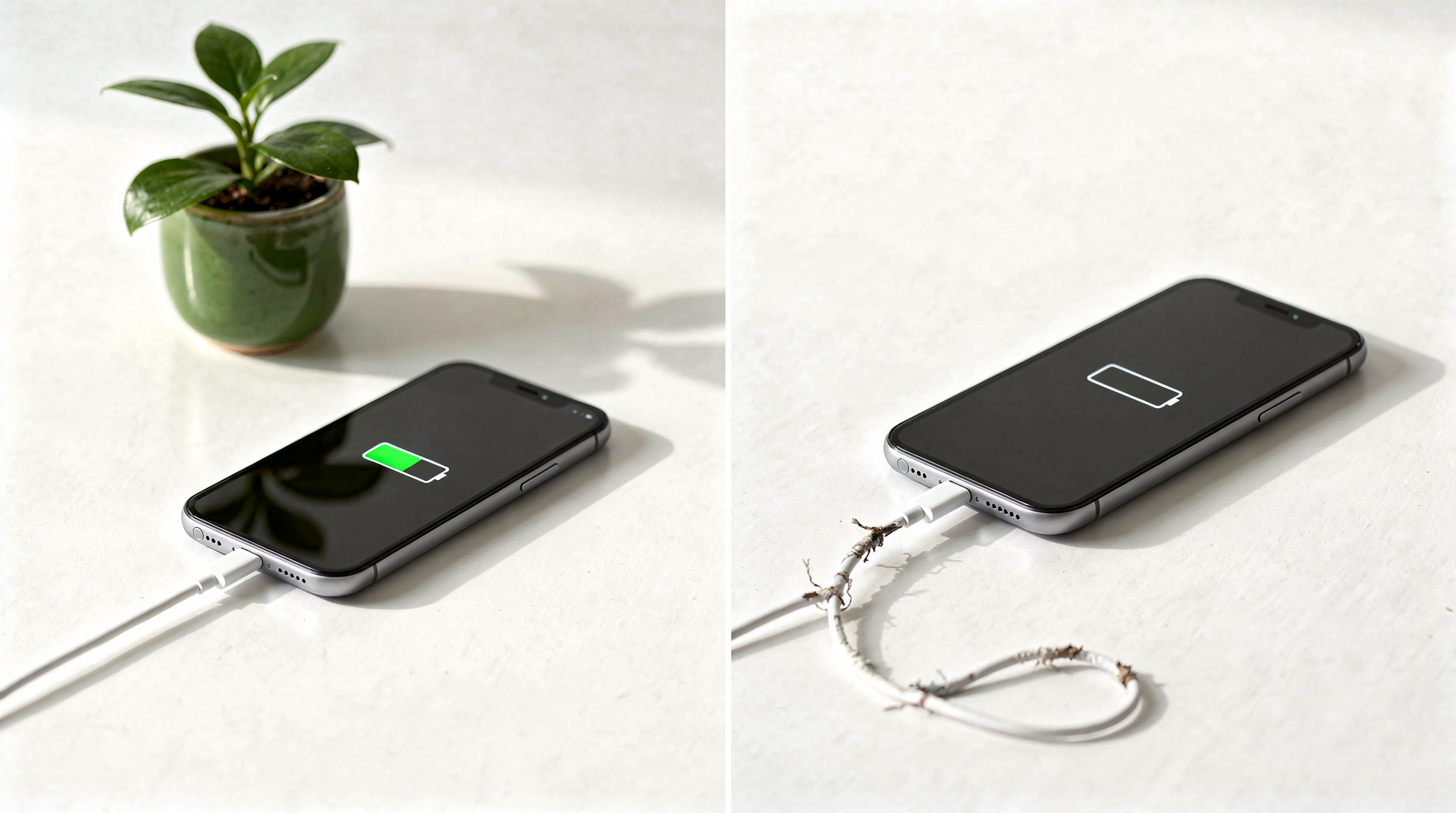
Tiredness or burnout: comparison
| Sign | Tiredness | Burnout |
|---|---|---|
| After weekends / holiday | Energy returns | Relief for 1–2 days, then «drained» again |
| 7–8 hours of sleep | Brings alertness | «I sleep but don’t feel rested» |
| Interest in work | Dips temporarily, then returns | «Whatever», cynicism, procrastination |
| Irritability | On top of sleep debt | Over small things, «not myself» |
| Body | Wants sleep | Headaches, gut issues, pressure «for no reason» |
Why do we mix up tiredness and burnout?
On the outside tiredness and burnout look the same: no energy, irritability, wanting to lie down. The difference is recovery: with tiredness, sleep and weekends bring alertness back in two to three days; with burnout, rest doesn’t refill resource as quickly — simplified, the «charger» no longer works as before. The brain doesn’t report deficit directly, so we blame laziness or «weak character» for years.
Muscles have pain receptors — after the gym you feel you overdid it. The brain has none. It won’t say «I’m tired» straight out. Instead the signal comes through irritability, anxiety, «can’t start the task», snapping at people close to you.
That’s why we label burnout as character for years: «I’m weak», «I need to pull myself together». But it’s not a willpower or motivation problem — it’s accumulated nervous-system resource deficit. Your character isn’t the issue here.
Another trap — coffee and a «second wind». Caffeine blocks adenosine receptors — the ones the brain uses to signal buildup of «waste» from neuronal work. Like a taped-over fuel gauge: you drive thinking the tank is full while energy reserves keep draining. A few hours later the second wind ends — and the deficit is deeper than before coffee.
If you recognised yourself in the table, remember: in early stages the system can still recover — if you stop only «resting» and start lowering spend.
What to do if you recognise yourself
You don’t need to «change your whole life in one leap». A few steps that lower load on the brain are enough:
If the state lasts months, interferes with work and relationships — it makes sense to work through your case with a psychologist, not only «hold on a bit longer». When urgent help is needed — emergency psychological help (112, 116 123).
See where your energy goes
«I’m just tired» and «I have burnout» are different states that need different approaches. The test doesn’t diagnose — it shows where energy leaks most and where to start recovery. A map across 4 scales helps spot problem zones.
Take the burnout test online · ~7 minutes · 4 scales · instant result.
If something in the result resonates — we can go through your case in a consultation. On the burnout page — symptoms, stages, and what actually helps at brain level.
Frequently asked questions
How quickly can I tell tiredness from burnout?
Give yourself 3–5 nights of stable sleep, 7–8 hours each. If alertness clearly returns — probably ordinary tiredness. If the «empty tank» stays — look toward burnout and take the test.
Can tiredness turn into burnout?
Yes. Chronic overload without recovery gradually exhausts the nervous system. Tiredness «covered» for months with coffee and willpower often becomes burnout — not weakness, but accumulated deficit without recovery.
Is holiday enough for burnout?
Holiday eases tiredness but not always burnout — see why vacation doesn’t cure burnout. You need to lower spend, not only add rest.