
Burnout
You sleep but have no energy: what happens in the brain
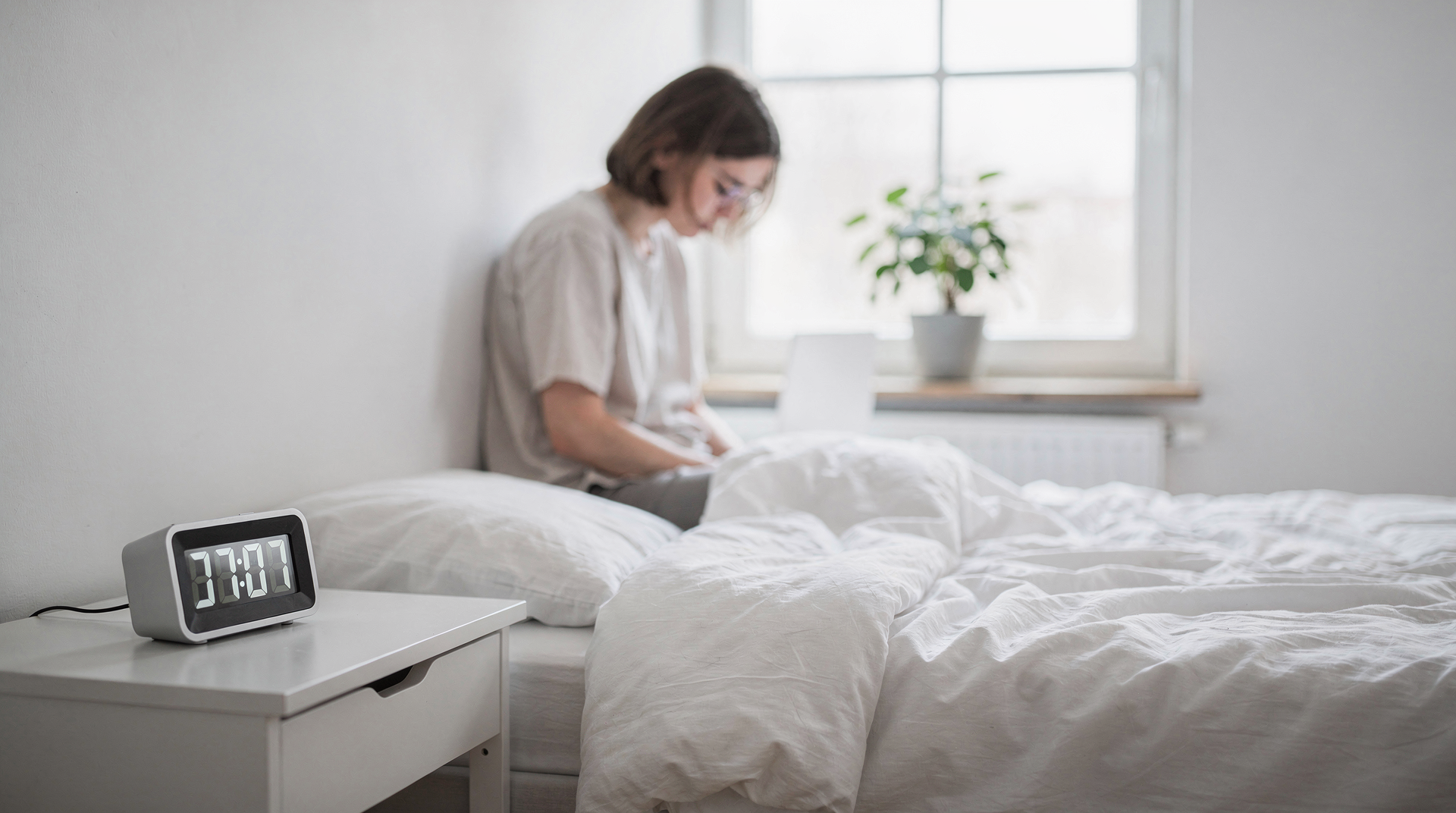
You go to bed on time, switch off screens, sleep eight hours — and wake up with an empty tank again. If «I sleep 8 hours but still feel tired» has become your norm, it’s rarely laziness. More often the brain doesn’t get the recovery you expect — even when you spend enough hours in bed.
We’ll look at why sleep doesn’t bring energy back with burnout, how that differs from ordinary tiredness, and what to check first. More on the burnout page.
Contents
Key points
Sleep that restores you
In normal conditions sleep isn’t «switching off» — it’s active recovery. In deep phases the brain consolidates memory, lowers daytime noise, and gives cells time to refill ATP — neuronal fuel.
The brain is about 2% of body mass but uses up to 20% of energy. Cells get fuel — including ATP — from food and oxygen; mitochondria play an important part in that chain. When load is temporary, several normal nights often bring alertness back.
Simple metaphor: 15% battery by evening, night on the charger — workable again by morning. After a one-off overload, two to three nights of 7–8 hours often bring alertness back. That’s why ordinary tiredness «fixes» with weekends and sleep — the battery was just low, not the charging system broken.
Why doesn't sleep restore energy?
You sleep eight hours but wake up drained because with chronic stress and burnout one night doesn’t compensate for what built up over months. This isn’t «bad sleep hygiene» — it’s an overloaded nervous system.
Sleep gives time in bed but after months of overload doesn’t «repair» exhausted systems on its own — hence «I slept enough, still no energy». In metaphor, resource goes to background vigilance, not rest; mitochondrial and ATP roles in chronic fatigue research are debated, but the «slow charging» image is clear.
At the same time chronic stress and anxiety block deep sleep. With burnout stress-axis regulation shifts — including a reduced morning cortisol rise (Oosterholt et al., 2015). The brain stays in light arousal, like an alarm in the background: formally you «slept», but restorative cycles were few. Deep sleep is when the brain most actively refills stores and «packs» memory; without it, eight hours in bed feel like four.
With burnout there’s another layer: the prefrontal cortex — the decision «dispatcher» — has worked without breaks for months. Even in sleep, some resource goes to background processing of unfinished tasks and worry. You’re not «bad at sleeping» — you’re sleeping while the nervous system doesn’t switch into full recovery.
This isn’t moral failure or «weak sleep». It’s a signal that sleep hygiene alone isn’t enough — you need to lower energy spend and look at load.
Burnout or «just bad sleep»?
One bad night — noise, jet lag, exam eve — passes in days. With burnout the picture lasts weeks and comes with other signs:
- «I sleep but don’t feel rested» — chronically, not now and then
- Interest dropped, cynicism, procrastination
- Holiday or weekend helps for a day or two — then drained again (see why vacation doesn’t cure burnout)
- Irritability over small things, body «for no reason» (head, gut)
The home test is the same as in burnout vs tiredness: three to five nights of stable 7–8 hour sleep. If alertness doesn’t return — look deeper, not only at pillow and routine.
Worth ruling out somatics: ferritin, vitamin D, TSH — on your GP’s advice. If labs are fine but the «empty tank» stays — often it’s the nervous system, not only «bad sleep».
Another marker: coffee stops «rescuing» you. Caffeine blocks adenosine receptors — the brain no longer gets deficit signals. Morning cup lifts you, by lunch you’re down again. Not weak willpower — driving with a taped-over fuel gauge when energy reserves are already at minimum.
What to check
- Sleep rhythm 3–5 nights in a row. Same bedtime, screen off an hour before — a melatonin signal, not perfectionism.
- Micro-pauses in the day. Five minutes without incoming every hour — a cognitive break: the brain needs to «digest» what’s already in, or resource drains on empty stream processing.
- One task off your plate. Not «learn to let go» — literally one thing today isn’t yours.
- Test + doctor if red flags. The burnout test shows which scale pulls hardest. If things worsen for months or you have thoughts of self-harm — GP, psychiatrist; urgently — emergency help (112, 116 123).
See where your energy goes
«I sleep 8 hours but still feel tired» is a common burnout symptom but not the only possibility. The test doesn’t diagnose — it shows where resource leaks most: responsibility, anxiety, sleep, body symptoms. Sometimes the «problem» scale isn’t sleep but anxiety or hyper-responsibility — then sleep hygiene alone isn’t enough, even with eight hours in bed.
Take the burnout test online · ~7 minutes · 4 scales · instant result.
On the burnout page — symptoms, stages, and what actually helps at brain level.
Frequently asked questions
Why do I sleep 8 hours but not feel rested?
Usually it’s sleep quality and chronic stress: few deep phases, anxiety won’t let the nervous system rest. Hours may be enough, recovery isn’t — not «I’m bad at sleeping» but overload. On recovery timelines — in the article «How long does recovery from burnout take?».
Is this burnout or chronic tiredness?
Tiredness often eases after proper sleep. Burnout — when rest doesn’t return energy for weeks, with cynicism, procrastination, irritability. Comparison: burnout vs tiredness.
Which tests should I get for constant fatigue?
A GP may order ferritin, vitamin D, TSH. If symptoms last months — ruling out somatics makes sense. But normal labs don’t replace work on load and stress.
How long does recovery take if sleep doesn't help?
It’s not «sleep more», it’s spend less energy by day. Early on, small changes show effect over weeks, not one weekend — see the recovery article for timelines. Sleeping ten hours to «catch up» rarely helps with burnout if daytime load stays the same.