
Articles
Low Self-Esteem – How Does It Affect You and What Can You Do About It?
Low self-esteem isn’t just a lack of confidence; it’s a deep-seated mechanism that governs your reactions long before you even realize what’s happening. It impacts how you build relationships, advance in your career, and even how your brain responds to daily challenges.

Contents
Key Takeaways
It’s not laziness, but a defense mechanismLow self-esteem isn’t a sign of weakness or laziness, but rather an adaptive brain response formed from past experiences. It protects you from reliving pain, but the price is missed opportunities. |
Social comparison – a brain trapEvolutionarily, the brain sought to gauge its place in the group. Today, this need is exaggerated by social media, where we compare the “behind-the-scenes” of our lives with the “showcases” of others, leading to chronic dissatisfaction. |
The brain’s negative bias works against youYour nervous system is inherently wired to notice threats and errors, not achievements, because this helped our ancestors survive. Without conscious effort, you’ll more often focus on your flaws. |
Self-esteem is a skill, not a fixed traitThe belief that low self-esteem is a life sentence is mistaken. It’s a dynamic skill that can be developed and changed. But this requires systematic action, not just “positive thinking.” |
Low Self-Esteem: What Is It, Really, and Why Does It Arise?
Imagine walking into a shop with an invisible sign on your back that reads: “I don’t deserve anything good; anything left over will do.” Sounds absurd, right? Yet, this is often how low self-esteem “operates.” It’s not just fleeting self-doubt or a few negative thoughts, but a deeply ingrained belief that influences everything: from the coffee you buy to the partner you choose for life.
Your brain, like a sophisticated computer, constantly processes information about you. If the “input” for a long time consisted of signals like “you’re not good enough,” “you won’t succeed,” or “it’s better not to stand out,” then the “output” will be a corresponding result. This forms a kind of “internal weather forecast” that predicts endless rain and storms, even when the sun is shining all around.
Low self-esteem is not a life sentence, but a program. A program that starts based on your experiences. The brain is an amazing adaptive mechanism. If, in childhood or youth, you frequently heard criticism, invalidation, if your achievements went unnoticed or were attributed to luck, the brain records this as “correct” data about your worth. And then it automatically reproduces this program to avoid expending extra energy on re-checking: “Why compare myself to others if I already know I’m worse? Why try if I’m just going to fail?”
How Does the Brain Form a Negative Self-Image?
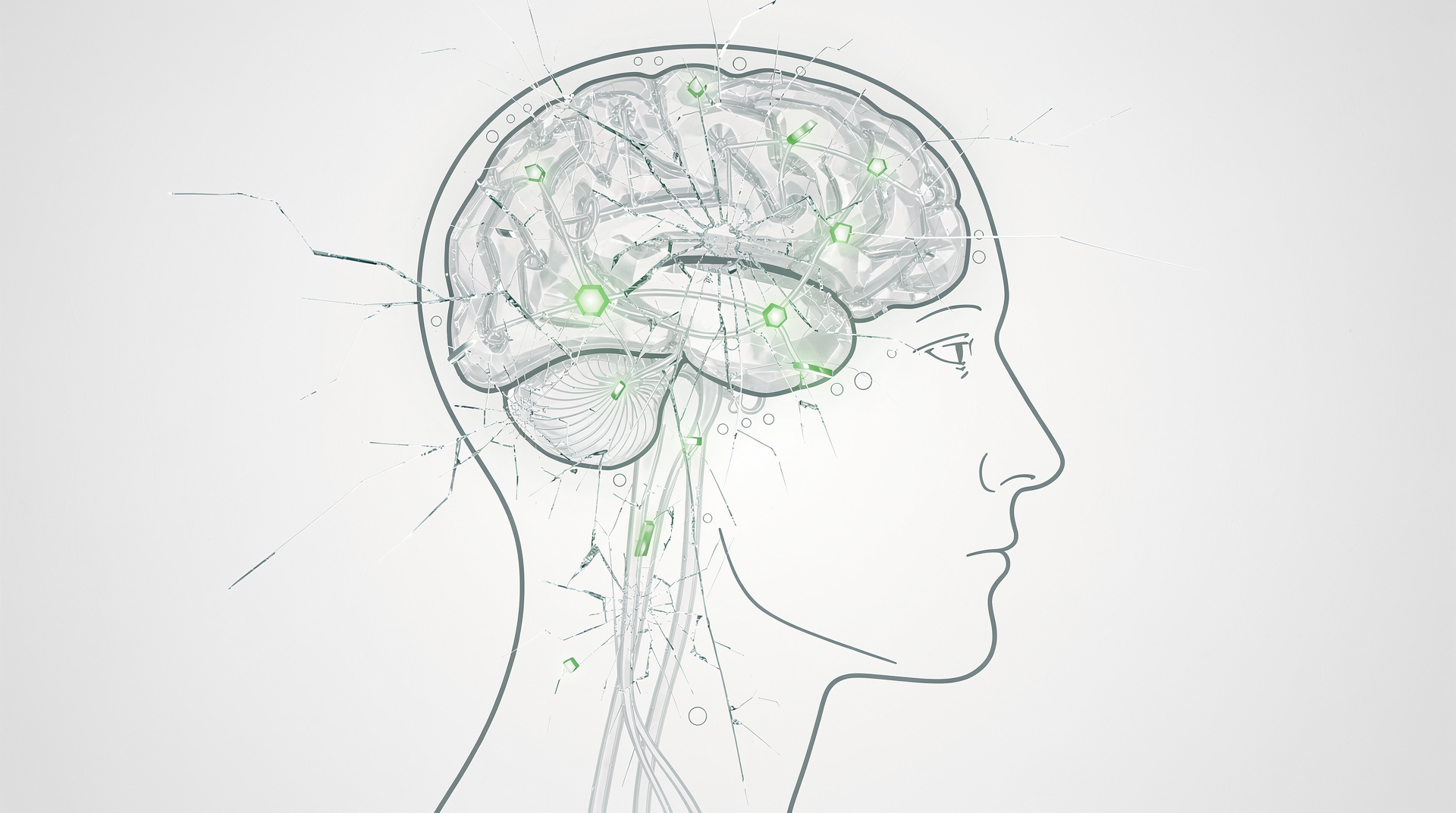
You may have noticed that you often focus on your mistakes for much longer than your successes. This is the effect of the brain’s negative bias. Imagine your brain as an ancient guard dog. Its primary task is survival. To survive in the wild, it was more important to remember where danger lurked than where beautiful flowers grew. Therefore, it learned to overreact to negativity. This function, ingrained over millions of years of evolution (regulated by the amygdala — the center for fear and aggression), is still active and causes us to cling to criticism while ignoring praise. It’s not “you are bad,” it’s “your brain is wired to survive.”
Additionally, there’s the mechanism of social comparison. In the past, knowing one’s place in the tribe was crucial for survival. Being ostracized meant starvation. So, the brain constantly scanned those around for “who is dominant, who is stronger, who is more needed.” Today, this function has mutated into endless social media scrolling. Your brain, instead of assessing its place in a real social group, compares your ordinary life with the edited, best moments of others’ lives. The brain doesn’t distinguish between reality and “the picture,” leading to a chronic release of cortisol (the stress hormone), undermining your confidence – because you always “fall short” of the ideals seen online.
Why Is Low Self-Esteem So Widespread?
So why do so many people experience this feeling? The answer, as is often the case, lies not in “you’re doing something wrong,” but in the layered complexity of the human psyche and the influence of the outside world.
One of the key factors is childhood experiences. Our brain, especially at an early age, is like a sponge soaking up information. If a child constantly hears criticism, invalidation, if their achievements are ignored or compared to more “successful” peers, this forms the foundation of their self-perception. “A child’s brain, like an unformed dam, absorbs every drop of water,” my old professor used to say. This “water” consists of the words of parents, teachers, and significant adults, which form the primary neural connections responsible for self-esteem. Every time you were told “Don’t touch that, you’ll break it!” or “Why can’t you be like your brother/sister?”, your brain concluded: “I am incompetent. I cannot be trusted. I am worse than others.”
As we grow, cultural and social factors add to this. Society often encourages competition, perfectionism, and external markers of success. We live in an era of “successful success” on social media, where every blogger is a millionaire, every acquaintance is a traveler, and everyone, it seems, lives a perfect life. Your brain, trying to synchronize with these “standards,” feels increasingly inadequate. This constant external pressure becomes a source of chronic stress, activating the same anxiety centers in the brain as real danger, further undermining self-confidence.
Common Myths: What's Holding You Back?
The world is full of advice on how to “just love yourself,” but many of these are not only useless but harmful because they are based on myths.
Myth #1: “Low self-esteem is a sign of laziness or weakness.”
People with low self-esteem often procrastinate or avoid new tasks, which others, and even they themselves, mistakenly attribute to laziness. In reality, it’s a protective brain mechanism. If you are convinced you will fail or be criticized, your brain triggers an avoidance mechanism to prevent emotional pain – much like a car alarm that goes off not just from a break-in, but also from strong winds.
Myth #2: “As soon as I achieve something, my self-esteem will immediately increase.”
Many believe: “Once I get a promotion, buy a car, get married – I’ll become more confident.” However, external achievements rarely change deep internal beliefs. If there’s a subconscious program of “I’m not worthy,” then even a Nobel Prize will be dismissed as “just luck” or “someone else would have done it better.” The brain will seek confirmation of the old program, ignoring new facts, to maintain its “worldview.”
Myth #3: “Self-esteem is a given; it cannot be changed.”
This is perhaps the most dangerous myth. It contains the trap of “learned helplessness” (a concept introduced by Martin Seligman): if you believe nothing can be changed, you won’t even try. In fact, self-esteem is not a fixed character trait, but a set of neural connections, beliefs, and behavioral patterns that can be restructured, similar to how muscles get stronger with training. It’s a skill that requires conscious effort and practice.
The Impact of Low Self-Esteem on Your Life: The Cost of Silence
Low self-esteem rarely goes unnoticed. It permeates all areas of your life, like an invisible poison, slowly eroding each day.
In relationships: you might constantly adjust to your partner, fearing rejection. Meanwhile, your brain, in a state of perpetual anxiety, often chooses unsuitable partners who confirm your negative self-beliefs. It’s as if you attract those who will echo “you’re not good enough,” because this information is familiar to your brain. Your own needs are ignored, and a sense of resentment and injustice grows, but you keep it inside – after all, “I have no right to demand.”
In career and finances: you might avoid new projects, decline promotions, even if you feel you have the ability. Your brain blocks your initiative, triggering thoughts like: “It’s too difficult,” “I can’t do it,” “What if I humiliate myself?” This internal critic, like a hungry predator, undermines your confidence, preventing you from even starting, and deprives you of the opportunity to earn what you deserve. And then you say, “Well, I knew I didn’t have the skills.”
In health: a chronic sense of inadequacy is constant stress for the body. Your brain is continuously in “fight or flight” mode, even when there’s no direct threat, releasing excess cortisol and adrenaline. This leads to chronic fatigue (even good sleep provides no rest), headaches, digestive problems, and a weakened immune system. It’s as if you’re constantly running a marathon, even while sitting on the couch.
In self-development: the desire to learn new things or try hobbies fades because your brain paints pictures of inevitable failure. You look at others, more successful, and think: “That’s not for me.” This is called learned helplessness – a state where an organism stops trying to improve its situation because past actions haven’t led to success. But the catch is that “failure” is often not real, but imagined by your own brain.
Can Self-Esteem Be Improved If It's Been Formed Over Years?
Yes. Self-esteem can be changed even after decades of “programming” — through neuroplasticity: the brain builds new connections when you regularly gain experiences that contradict the old belief of “I’m not good enough.” This is not a quick upgrade but a series of small confirmations of a new self-image.
What Can You Do Today
When to See a Specialist
If low self-esteem is no longer “background noise” but a constant filter through which you view work, relationships, and health – it makes sense not to try to prove your willpower, but to dismantle the mechanism with a professional. Especially when you’ve been avoiding opportunities for years, tolerating toxic relationships, or can’t handle even mild criticism without prolonged self-reproach.
During a consultation, you can identify where real feedback ends and the old “childhood program” begins, and build a plan for change that your brain can accept as safe. You can book an appointment online or in Tallinn. If the situation is acute, seek emergency help.
Frequently Asked Questions
Can I "just love myself" and everything will be fine?
Generally, no. The brain changes beliefs through experience, not slogans. Affirmations without actions often intensify internal conflict: “I say one thing, but feel another.” The effective path involves small steps that give the brain new evidence.
Is improving self-esteem about egoism?
No. Healthy self-esteem is a realistic assessment of one’s strengths and weaknesses. It helps to set boundaries without aggression and to care for others without losing oneself. Egoism is “I am always right,” not “I have the right to be respected.”
How long does it take to feel changes?
Initial shifts are often noticeable within 3–6 weeks of regular practice: less self-criticism, more calm in simple situations. Deep-seated beliefs, formed over years, require months – this is normal, not a sign that “something is wrong with you.”
Do I need a psychologist if I "can cope anyway"?
If self-help works, that’s excellent. A specialist is needed when you’re stuck in the cycle of “I know what to do, but I don’t do it” or when self-esteem is already affecting your health, relationships, and income. Sometimes, one diagnostic consultation provides a roadmap, not “therapy forever.”