
Articles
How to Cope with Anxiety
Anxiety is not a life sentence or a sign of weakness. It’s an ancient survival mechanism that, today, often operates in overdrive. Your brain isn’t “broken.” It’s simply trying too hard to protect you from threats that have long since vanished from modern life.

Table of Contents
Key Takeaways
| Anxiety is not a weakness. It’s an evolutionary mechanism that helped our ancestors survive, but today it often misfires in harmless situations because your brain struggles to differentiate between real and imagined threats. | Your brain struggles with real vs. imagined threats. The amygdala triggers a “fight or flight” response even to thoughts of potential failure. In response, your adrenal glands release cortisol and adrenaline—acute stress hormones that mobilize your body. In a critical situation, this saves you, but with constant releases, these hormones exhaust the system, like an overloaded engine running on fumes. |
| “I understand everything is fine, but my body reacts differently”—this isn’t something you’re imagining. It’s a mechanism where the brain becomes accustomed to frequent anxiety triggers and perceives threats where none exist. Old neural pathways strengthen with each repetition. | Completely eliminating anxiety is impossible, and unnecessary. The goal is to learn to manage it so it doesn’t hinder your life, but instead serves as a useful signal. This isn’t a battle against yourself, but rather a fine-tuning of your own internal instrument. |
Anxiety: An Evolutionary Mechanism, Not a Flaw
“I’m constantly worried, even when there are no obvious reasons. What’s wrong with me?” you might ask yourself. The paradox, however, is that there’s nothing wrong with you at all. Your anxiety isn’t a sign of being “faulty” or weak, but rather the result of an evolutionary program that, in different circumstances, would be incredibly beneficial.
Imagine early humans. Their brains, particularly the amygdala in the limbic system, were wired to instantly detect danger: a rustle in the bushes, the shadow of a large bird. This was the “inner alarm system” that screamed: “Danger! Prepare to run or fight!” When danger was perceived, the body didn’t waste time thinking – it acted. Adrenal glands released adrenaline and cortisol, mobilizing all resources: heart rate increased, blood pressure rose, muscles tensed for action. Thanks to this lightning-fast reaction, our ancestors avoided predators and left offspring.
Today, there are likely no bushes with predators in your life. But a meeting, a deadline, or uncertainty about the future can be perceived by your brain as quite the “rustle in the bushes.” The deeper parts of your brain haven’t read a psychology textbook and don’t know the difference between facing your boss and facing a bear. They trigger the very same reaction: heart rate quickens, palms sweat, thoughts race in circles. You might be in an office, but your body, loyal to an ancient program, is ready for battle.
This isn’t a flaw in your psyche. It’s its historical legacy, which, in the modern world, often misfires.
Your Brain: A False Alarm Predicament
Does this sound familiar: “I know intellectually it’s silly, but I can’t help it!” You’re perfectly safe, yet you feel a tension as if something terrible is about to happen. Your heart pounds, your hands tremble. The rational part of your brain screams, “Everything’s fine!”—but the rest of your body isn’t listening. Why?
Because your brain doesn’t differentiate clearly between a real threat and an imagined one. This isn’t your imagination or an exaggeration; it’s the very structure of your nervous system.
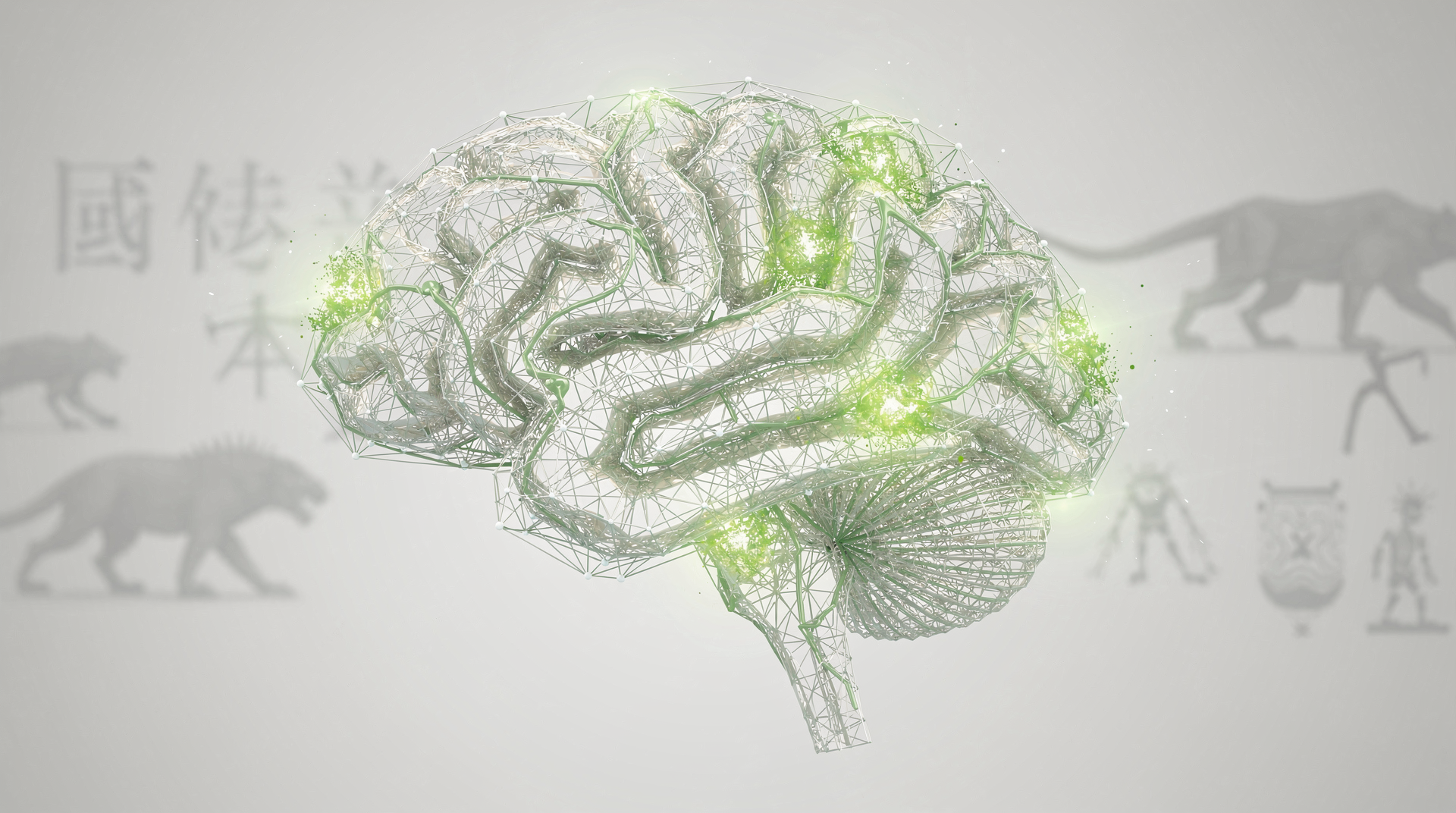
The mechanism is simple: with any uncertainty, any thought labeled “potentially bad” is perceived by the amygdala as an activation signal. You might think about an upcoming presentation, and somewhere deep in your consciousness, a thought often surfaces: “What if I stammer? Everyone will think I’m incompetent.” This “what if” is the trigger. The amygdala doesn’t analyze probabilities. It simply sends a signal to the hypothalamus, which then signals the adrenal glands. The result is another dose of cortisol and adrenaline—stress hormones.
Your nervous system tenses, muscles contract, breathing quickens, and your focus narrows. It’s as if you’ve encountered a dangerous animal. This isn’t an exaggeration—it’s physiology. At the brain level, the exact same activation occurs as before a real danger. Your body doesn’t know the difference.
The problem is that in the modern world, such “dangers” are far more frequent than actual predators. Constantly scanning the future for threats—”what if…”, “what if… happens”—is one of the basic habits of an anxious person. And each time you get caught in this spiral, you strengthen the neural pathway in your brain. The more frequently you’re anxious, the more successfully connections form between neurons that support this mode of reaction. Your brain literally learns to be anxious.
It’s like a learning system: if something helped you survive, your brain decides it’s an effective strategy. If you worried and nothing bad happened, then your anxiety protected you. Your brain tells itself, “Great, keep it up!” And the next time, anxiety kicks in even faster and stronger.
It’s like a fire alarm set to be overly sensitive: it reacts not only to smoke from a fire but also to steam from a kettle. Each time such a false alarm goes off, your body experiences full-blown stress—the same physiological state as encountering a real danger.
This is not healthy caution; it’s a system that has hijacked your attention and won’t let go. Constant release of cortisol and adrenaline acts on your brain and body like an engine continuously running at high RPMs with minimal fuel. This leads to depletion of neurotransmitters, sleep disturbances, problems with concentration, and, over time, chronic overexertion.
When Anxiety Narrows Your World: How It Manifests
When your anxiety system is working at full capacity, it’s not just unpleasant—it changes your entire life. “I live in a fog,” “something always hurts, but doctors find nothing,” “after work, I have no energy even for hobbies”—you might recognize yourself in these words. Perhaps you’ve even heard people say, “That’s just laziness” or “You lack willpower.” This is not the case.
It’s not a matter of willpower or laziness. It’s a direct consequence of chronic stress and an overloaded system. Elevated levels of cortisol and adrenaline act as a chronic overload on your nervous system. These hormones deplete neurotransmitter stores, such as serotonin. It’s like using your smartphone on maximum brightness for too long without recharging—the battery will drain quickly, and the phone itself will slow down. In your case, this manifests differently:
Sleep disturbances: You struggle to fall asleep, wake up at night, and in the morning feel as if you haven’t slept at all. Your “alarm” never switches off, even at night. Your brain continues to scan your surroundings for threats, even when you’re in bed. It’s like a car alarm that goes off every time someone walks past—the car can’t rest.
Problems with concentration and memory: “Brain fog,” inability to focus on tasks, forgetfulness. Your brain is too busy processing potential threats to effectively work with new information. It allocates resources to survival, not learning. This is normal behavior during a crisis, but abnormal when there is no crisis, yet the body thinks there is.
Constant muscle tension: Neck, shoulder, and back pain, headaches, feeling like you’re standing on tiptoes all day. Your body is in a state of readiness, even when there’s no threat. It’s like holding a barbell hoisted all day—eventually, muscles get tired, start aching, and lose functionality.
Irritability and mood swings: You get easily upset, feel down more often, and emotions fluctuate without apparent reason. Your nervous system is overloaded and can’t regulate emotions effectively. This isn’t your personality; it’s the physiology of an overloaded system.
Avoidance: You start declining new opportunities, meetings, trips, because anticipation causes even more anxiety. Your world shrinks. You get stuck in a comfort zone where nothing threatens to trigger your alarm. This works in the short term, but over time, your life becomes increasingly limited.
All these symptoms are not your weakness or a “flawed character.” They are a natural, predictable response of the body to prolonged activation of the anxiety system. These symptoms are not your fault, but a signal. It’s like trying to drive a car with the brake pedal constantly pressed—the engine roars, fuel consumption skyrockets, and speed is minimal. And sooner or later, something will break.
Is Anxiety an Illness?
No, anxiety itself is not an illness, but a natural emotional reaction and an important survival mechanism. It becomes a problem when it occurs too frequently, too intensely, or in situations that don’t involve a real threat, and begins to interfere with daily life.
When anxiety crosses a line and stops being a helpful signal, it evolves into an anxiety disorder. But this doesn’t mean something is broken with you. It means your defense system is hyperactive—and it can be re-trained.
What You Can Do Today
When to Seek Professional Help
If anxiety is a constant background rather than a brief signal, it helps to unpack the mechanism with a professional. Book an online session or an appointment in Tallinn. For acute situations, see emergency care options.
Test Yourself
To gauge how much anxiety affects your life right now, take a short anxiety self-assessment. The result is not a diagnosis — only a guide for next steps.
Frequently Asked Questions
Is anxiety an illness?
No. Anxiety is a natural response to uncertainty. It becomes a problem when it is frequent, intense, or appears without real threat and starts interfering with work, sleep, and relationships.
Why does my heart race when I “know” I’m safe?
The amygdala does not always distinguish real from imagined threat. A thought about possible failure can trigger the same physiology as actual danger — that is nervous system wiring, not weakness.
Can I get rid of anxiety completely?
No, and you should not aim for that. The goal is to manage intensity so anxiety stays a useful signal instead of constant background noise.
Will a psychologist help if I “already know what to do”?
If you are stuck in “I know but don’t do” or symptoms persist for months, a consultation helps find triggers and choose techniques that fit your nervous system.