For parents
Teenage Aggression: What's Behind the Outbursts
A door slammed with deafening force. A furious, “You don’t understand anything!” A silence that cuts deeper than a scream. If you’re the parent of a teenager, these scenes are likely all too familiar. And your first reaction? Probably hurt, confusion, or anger in return. But this behaviour isn’t a sign of a bad character or your failure as a parent. Teenage aggression is rarely a conscious choice; it’s often a biologically driven reaction from a brain undergoing the most massive reconstruction of its life. By understanding its mechanisms, you can shift your strategy from fighting to dialogue.

Contents
Key Takeaways
The Teen Brain: Why Is the Gas Pedal Floored Without Brakes?
Imagine your teenager has been given a powerful sports car, but with a catch: the gas pedal works perfectly, but the braking system is still being installed. Sounds like a recipe for disaster, right? That’s roughly what’s happening inside their head.
The brain’s emotional centre—the limbic system, especially the amygdala—is fully developed by adolescence. This is the gas pedal, responsible for powerful feelings like anger, fear, and joy. It reacts instantly and forcefully. You might say, “Homework first, then the computer,” but their brain interprets it as, “Total control, a threat to my freedom!” and slams the pedal to the floor.
Meanwhile, the “brakes”—the prefrontal cortex, a region in the frontal lobe responsible for planning, assessing consequences, impulse control, and sound decision-making—is the last area to mature, finishing its “fine-tuning” only around age 23-25. This isn’t an excuse; it’s a neurobiological fact. When the amygdala screams, “DANGER! ATTACK!”, the prefrontal cortex simply can’t intervene fast enough to say, “Calm down, it’s just your parent, let’s talk this through.” This is where teenage aggression comes from: first the explosion, then (sometimes) the regret.
This isn’t a defect or a malicious act. It’s a feature of this developmental stage. Your teenager doesn’t want to hurt you, but their brain isn’t yet physically equipped with a reliable mechanism to contain emotional storms.
Hormones, Status, and the "Social Paycheck"
On top of this brain development imbalance, there’s a hormonal surge. Levels of testosterone and other hormones spike, increasing sensitivity to issues of status, competition, and respect. A parent’s internal monologue, “I’m just showing I care by pointing out the mess in their room,” clashes with the teenager’s subconscious perception, “They’re humiliating me, they think I’m incompetent, my status is under threat.”
The human brain is a social organ. To it, being rejected by the group or losing respect is a threat comparable to physical pain. In prehistoric times, being cast out from the tribe meant certain death. Our brain still remembers that rule. So, every piece of criticism, every prohibition, every “I know best” can be perceived not as care, but as an attack on their social self. And the brain chooses to defend itself in the most accessible way it knows: with aggression.
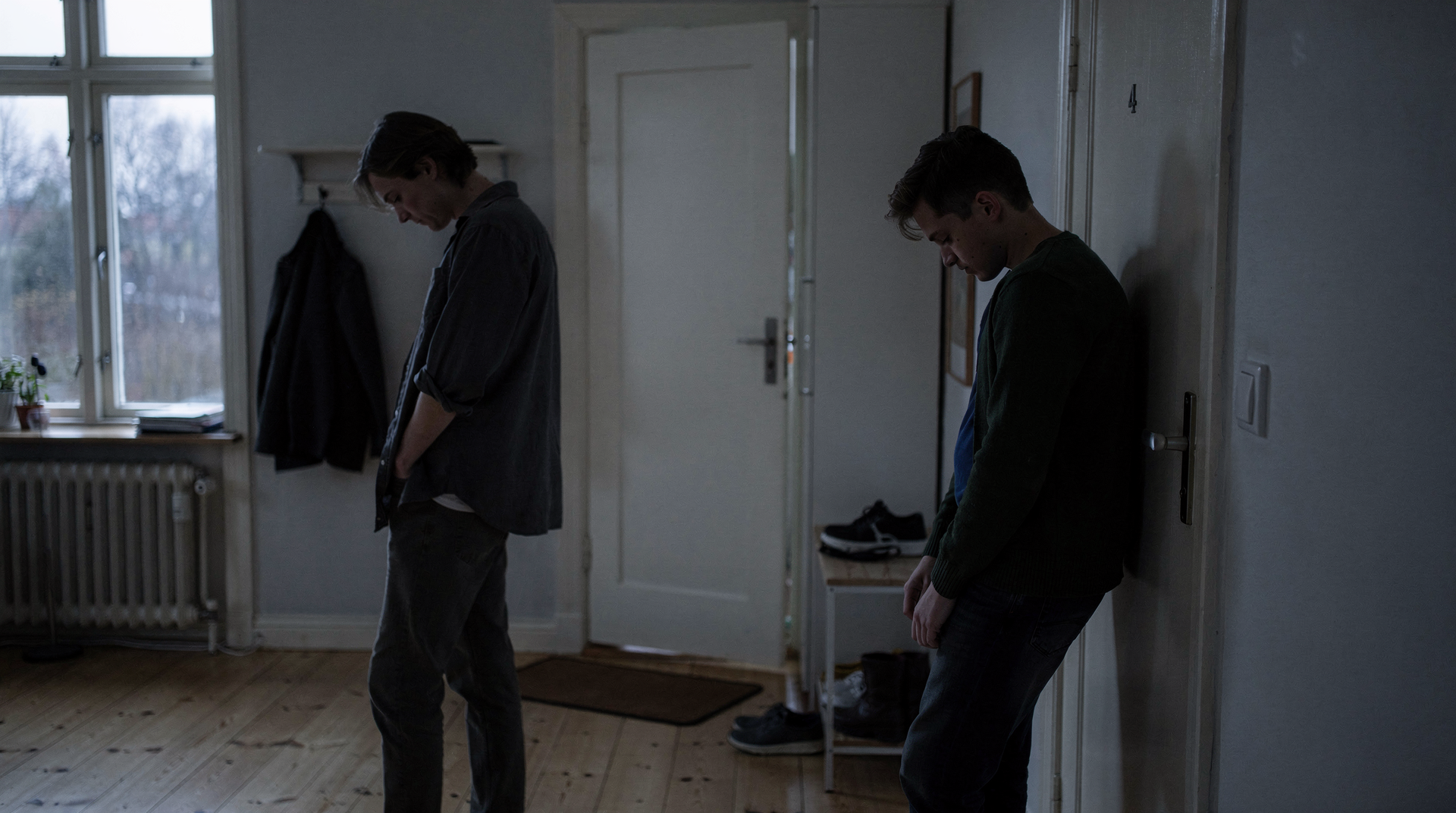
Think of it as a “social paycheck.” A teenager has a vital need to receive validation of their significance, autonomy, and competence. When this doesn’t happen, their “account” goes into the red. Aggression, in this case, isn’t an attack but a desperate attempt to protect what’s left of their social capital or to forcibly demand a “payout” in the form of respect. They’re not fighting you; they’re fighting a feeling of powerlessness and humiliation.
Defence or Attack: How the Brain Chooses Aggression
Why does one teenager stay silent at a comment while another explodes? It’s all about how their brain assesses the situation. The amygdala is responsible for the rapid evaluation of “friend or foe,” “safe or dangerous.” If it flags a situation as a “threat,” it triggers a cascade of stress reactions.
This is where the crucial choice is made between “fight,” “flight,” or “freeze.” If the teenager feels cornered (for example, you’re reprimanding them in front of friends or not letting them speak), the “flight” or “freeze” options seem impossible. That leaves only one option: “fight.”
- Metaphor: Imagine a guard dog on a short leash (the amygdala). When someone gets too close to its territory (the teenager’s personal space or autonomy), it starts to growl. If the person doesn’t back away but keeps advancing, the dog has no choice but to lunge.
- Mechanism: Your word or action is perceived as a threat. The amygdala activates and sends a signal to the hypothalamus, which triggers the release of stress hormones—cortisol and adrenaline. The body prepares for battle: the heart beats faster, muscles tense, and rational thinking shuts down.
- Anchor: This reaction is called an “amygdala hijack.” At that moment, the emotional brain completely takes over the rational brain. Trying to argue, appeal to logic, or shame them in that instant is like trying to shout over a fire alarm. The only result will be an escalation of their aggression.
It’s crucial to understand: for their brain, this isn’t melodrama. It’s a real battle for survival. They aren’t defending messy socks; they’re defending their right to autonomy and dignity.
How to Distinguish Normal Aggression from a Deeper Problem
Normal teenage aggression is usually situational, aimed at defending boundaries, and is often followed by remorse. You should consider a deeper problem if the outbursts of anger become extremely frequent and uncontrollable, or are accompanied by physical violence, destruction of property, self-harm, or plans for revenge. If aggression is interfering with their ability to study and maintain friendships, it’s time for a consultation.
What to Do Today
You can’t eliminate aggression completely, nor should you—it’s an important signal. But you can learn to manage it without destroying your relationship. Here are a few steps you can take today.
When It's Time to See a Specialist
Trying to handle things on your own is a normal first step. But there are situations where a specialist’s help is essential. This isn’t a sign of weakness but an act of care for your child and yourself.
You should seek a consultation if:
- Your teenager’s aggressive outbursts become regular and intense.
- The aggression involves physical violence toward family members, animals, or themselves (self-harm).
- You see signs of depression, such as apathy, loss of interest in everything, or problems with sleep and appetite.
- The teenager has started using alcohol or drugs.
- You feel you’ve completely lost your connection with your child and are at a dead end.
- Your home environment starts to feel unsafe.
Sometimes, what’s needed is a neutral third person in the conversation to help you hear each other without shouting and accusations. In a consultation, we don’t look for who’s to blame; we work to understand the mechanisms that trigger conflict and find new ways of communicating that work for your family.
You can book an online session or an in-person consultation in Tallinn to find a way forward together.
If the aggression takes a dangerous turn (threats to life, serious violence), don’t wait—seek emergency care immediately.
Frequently Asked Questions
Is it my fault my child is so aggressive?
No, the concept of “fault” isn’t helpful here. Aggression is the result of a complex interplay between biology (brain development, hormones), the child’s temperament, and the family system. Instead of looking for someone to blame, it’s more productive to focus on how you can change the communication dynamic and help your teen learn new ways of responding.
Should I punish them for being aggressive?
Punishment, especially physical or humiliating punishment, usually makes the problem worse. It confirms for the teenager’s brain that the world is a hostile place where you have to fight for yourself. A system of natural consequences is far more effective. Not, “You’re grounded,” but, “You broke a cup in your anger—now you can help me clean it up and use your pocket money to buy a new one.”
Will this ever end? Will they just grow out of it?
Yes, as the prefrontal cortex matures (by age 25), impulsivity naturally decreases. However, behavioural patterns learned during adolescence can stick for life. If a teenager doesn’t learn how to manage anger constructively now, this problem can carry over into their adult life. Waiting for it to “just pass” is a risky strategy.
What should I do if the aggression is directed at younger siblings?
Intervene immediately. Your first job is to ensure the safety of all your children. Firmly and clearly stop the conflict and separate the children into different rooms to cool down. Later, when everyone is calm, talk to each child individually and then bring them together to teach them conflict-resolution skills that don’t involve violence.