
Articles
Psychologist vs. Clinical Psychologist: What’s the Difference?
Imagine you’ve decided to get in shape. Would you go to a fitness trainer or a sports doctor? The answer depends on your goal: to build muscle or to figure out why your knee hurts. The same logic applies to psychologists. The key difference between a general psychologist and a clinical psychologist is their specialisation. One is your personal “navigator” for a healthy mind, while the other is a “diagnostic engineer” who works at the intersection of normalcy and pathology, conducting in-depth assessments. They have different tasks, and your choice depends on your problem.

Contents
- The Essentials: 4 Key Differences
- The Psychologist: A “Navigator” for Life’s Mazes
- The Clinical Psychologist: An “Engineer” Who Reads the Mind’s “Blueprints”
- Diagnostics: The Line Between “Teaching” and “Troubleshooting”
- Can a Clinical Psychologist Prescribe Medication?
- What Issues Do You Take to a Psychologist?
- When Do You Specifically Need a Clinical Psychologist?
- What to Do Today
- When to See a Specialist
- Frequently Asked Questions
The Essentials
The Clinical Psychologist: An "Engineer" Who Reads the Mind's "Blueprints"
Now, imagine the problem isn’t your driving style. You press the accelerator, but the car sputters. Unfamiliar lights are flashing on the dashboard. You feel that something is wrong on a deeper level. Here, you don’t need an instructor; you need a diagnostic mechanic who can connect a scanner to the car’s “brain” and read the error codes. This is the role of a clinical psychologist.
A clinical psychologist is a specialist with a psychology degree who has undergone advanced training at the intersection of psychology and medicine. It’s important to understand: a “clinical psychologist” is not “almost a doctor,” as many think, nor someone who will give you “clinical diagnoses” like a psychiatrist. They are a specialist who sees not just your behaviour and thoughts, but also their impact on your nervous system’s functioning. They don’t just work with a “diagnosis,” but with an understanding of how specific mental functions have been disrupted.
Their superpower is diagnostics. They don’t just listen to your complaints; they test them with specific tools. These aren’t quizzes from glossy magazines. They are standardised methods that objectively assess how your “processor” is working: how well you can concentrate, how quickly you switch attention, how your memory retains information, and whether your thinking has systemic distortions typical of certain disorders. They understand how prolonged stress can disrupt the balance of neurotransmitters—the brain’s chemical “messengers,” like dopamine and serotonin—which are responsible for motivation, mood, and information processing. If these “messengers” don’t deliver messages on time or there are too few of them, it affects your ability to concentrate, feel joy, or even sleep properly. They seek to answer the question, “Why is this happening to me at a systemic, biological level?”
Diagnostics: The Line Between "Teaching" and "Troubleshooting"
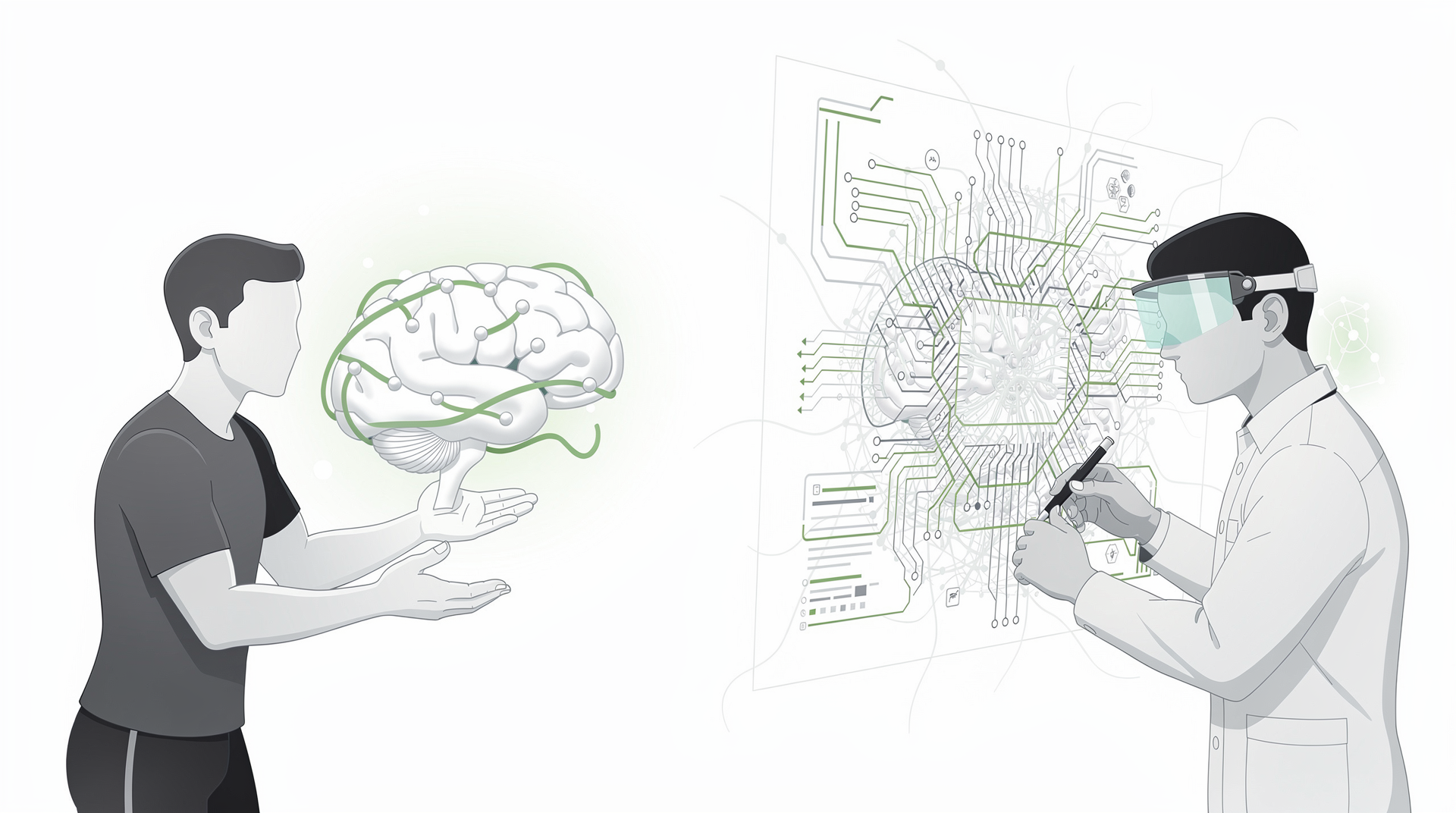
The main distinction to grasp is the depth of the “scan.” A general psychologist works with your story, your feelings, and your thoughts. A clinical psychologist cross-references your story with objective data about how your mind is functioning.
Imagine you complain, “I’ve become scattered, I can’t remember anything, and I’m making silly mistakes at work. I must be lazy and stupid.”
- A counselling psychologist will work with your feelings of guilt and self-criticism, looking for possible causes in stress or loss of motivation. This is working with the “software”—your beliefs and emotions.
- A clinical psychologist will say, “Let’s check that,” and suggest you undergo a series of neuropsychological tests.
And here’s where it gets interesting. The results might show that you’re not “lazy,” but are experiencing an objective depletion of your brain’s executive functions. Picture a CEO’s desk overflowing with so many incoming documents that nothing gets processed on time. This system, located mainly in the frontal lobes, is responsible for planning, attention control, impulse control, and task switching. The mechanism is simple: chronic stress or emerging depression can literally exhaust the glucocorticoid receptors in your brain—special sensors that manage the stress response. After prolonged overload, their sensitivity decreases, and the brain starts operating in “emergency mode,” burning through cortisol (the stress hormone) for activation without adequate recovery. The system responsible for planning and concentration begins to fail, like an engine running on an empty tank, even if you don’t feel physically exhausted. The result is mistakes, forgetfulness, and an inability to focus.
With this data, a clinical psychologist can say, “Look, it’s not about your laziness. Your ‘CEO’ is overloaded and running on fumes. It doesn’t need motivation; it needs recovery.” This completely changes the therapeutic approach. We stop fighting the windmills of “laziness” and start targeting the root cause: nervous system depletion. This is a simplification, of course—technically, hundreds of systems and substances are involved—but the concept is key: diagnostics shifts the problem from the moral realm (“I’m a bad person”) to the physiological (“the system has a glitch”).
Can a Clinical Psychologist Prescribe Medication?
No, they cannot. Prescribing medication (antidepressants, tranquillisers, neuroleptics) is exclusively the domain of a psychiatrist, a medical doctor with a degree in medicine. A clinical psychologist is a psychologist, not a doctor. However, they often work in tandem with a psychiatrist, helping to clarify a diagnosis and supplementing medication with psychotherapy to achieve the best possible outcome.
What Issues Do You Take to a Psychologist?
Seeing a counselling psychologist or psychotherapist (non-clinical) is appropriate when you are generally coping with life, but a specific aspect is causing chronic discomfort. Your condition isn’t paralysing you, but it is reducing your quality of life. When you’re asking yourself, “How can I deal with this?” rather than “What is wrong with me?”—you probably need a counselling psychologist.
For example, you might feel, “I constantly argue with my partner over small things, even though I love them,” or “I’m afraid to change jobs, even if my current one makes me miserable.” This isn’t about a “breakdown,” but about developing new, more effective strategies for interacting with the world and yourself. A psychologist can help you understand where these patterns come from and how to change them to make your life more conscious and manageable.
- Relationship problems: conflicts with a partner, parents, children, or colleagues.
- Low self-esteem, imposter syndrome, lack of self-confidence.
- Difficulty with choices: career path, professional identity, life goals.
- Navigating life crises: divorce, job loss, relocation.
- Feelings of loneliness, difficulty forming close relationships.
- Self-discovery, a desire to better understand your needs and wants.
When Do You Specifically Need a Clinical Psychologist?
You need a clinical psychologist when your inner voice is no longer just “I’m sad,” but “I can’t go on like this, it’s ruining my life.” These are cases where symptoms become so intense that they seize control, and your usual self-help tools are useless. Perhaps you find that “I can’t get out of bed in the morning, even though I know I have to,” or “Panic attacks strike for no apparent reason and make it impossible to leave the house.” This is precisely the situation that requires a specialist who can not just “fine-tune” but deeply investigate the reasons for this system “glitch.”
- You suspect you have depression: persistent low mood, no energy or joy, everything feels meaningless.
- You are plagued by panic attacks, constant anxiety, obsessive thoughts, or compulsive actions (rituals).
- You have experienced a traumatic event (PTSD) and cannot return to a normal life.
- You have a diagnosis (or suspicion of one) like ADHD, a personality disorder, or bipolar disorder.
- You notice serious problems with memory, attention, or thinking that aren’t related to normal fatigue.
- Therapy with a counselling psychologist has hit a dead end with no visible progress.
- Your emotional reactions seem excessive and uncontrollable, leading to major problems in your life.
What to Do Today
If you’re at a crossroads, here are a few steps to gain some clarity.
When to See a Specialist
If you’re confused and the internal debate of “Is this nothing or is this serious?” is draining your last bit of energy, you don’t have to solve this puzzle alone. A diagnostic consultation isn’t necessarily the start of long-term therapy. Sometimes, it’s just a way to get the “lay of the land,” understand what’s happening to you, and create a plan of action. It could be the most valuable hour you’ve dedicated to yourself in a long time.
In a consultation, we can determine the level of the problem we’re dealing with and which specialist you need. Sometimes, a few sessions are enough to resolve the issue; other times, deeper work in conjunction with a medical doctor is required.
You can book an initial consultation online or in Tallinn.
If your condition is acute and you feel there is a threat to your life or health, do not wait for an appointment. Seek emergency care.
Frequently Asked Questions
How is a clinical psychologist different from a psychiatrist?
The key difference is in their education and methods. A psychiatrist is a medical doctor who makes medical diagnoses and primarily treats with medication (antidepressants, neuroleptics). A clinical psychologist has a degree in psychology with a clinical specialisation and cannot prescribe medication. Their tools are psychodiagnostics and psychotherapy.
I'm seeing a psychologist, but I'm not getting better. Should I see a clinical one?
Yes, that’s a very sensible idea. If therapy isn’t bringing relief or has stalled, a consultation with a clinical psychologist can be beneficial. It’s possible there is an underlying neuropsychological or pathopsychological aspect to your problem that hasn’t been considered. A diagnostic assessment can help clarify the situation and potentially adjust your treatment strategy.
Do I need a referral from a doctor to see a clinical psychologist?
To see a private clinical psychologist, you do not need a referral. You can book an appointment on your own. A referral might be necessary if you are seeking help through a public healthcare system or insurance, depending on the specific rules of the country and your insurance provider.