
Burnout
Brain fog and procrastination with burnout
You sit down to a task — and your head feels foggy. You read a paragraph three times, nothing sticks. You put it off «for later» and call yourself lazy. Brain fog and procrastination with burnout aren’t weak character: they’re a signal from an overloaded prefrontal cortex, the brain’s «dispatcher» that can’t keep dozens of tabs open anymore.
We’ll look at the mechanism without moralizing, how fog differs from ordinary tiredness, and what helps today — single-tasking without a «three-day miracle» promise. More on the burnout page.

Contents
Key points
What «brain fog» means with burnout
«Brain fog» is everyday language for thoughts that stick: hard to hold a thread, recall a word, finish an email. With burnout it’s a common companion to exhaustion — along with irritability and «can’t make myself do it». Hours may be there, clarity isn’t: you read and don’t remember what the paragraph was about.
Metaphor: a browser with fifty tabs — technically on, but sluggish. The prefrontal cortex is the brain’s «control tower»: holding goals, switching, braking impulses. After months of overload there isn’t enough resource for complex tasks — simple ones still work, concentration-heavy ones fail more (Diestel & Schmidt, 2013).
This doesn’t mean «you got dumber». It’s a protective mode: the brain saves resource until load drops. If clarity returns after a weekend — more likely ordinary tiredness; if not for weeks — look at burnout, not only «discipline» (see «Burnout or tiredness: how to tell the difference»).
Why can't you focus?
With burnout concentration drops because the prefrontal cortex is overloaded: too many open processes, too few recovery pauses. Attention «jumps» not from weak will — from too little resource to hold one goal.
Research links persistent exhaustion with slower information processing (Potter et al., 2021). Switching between tasks itself costs time — the brain doesn’t do two hard things in parallel, it hops between them (Rubinstein et al., 2001). With burnout each hop feels heavier.
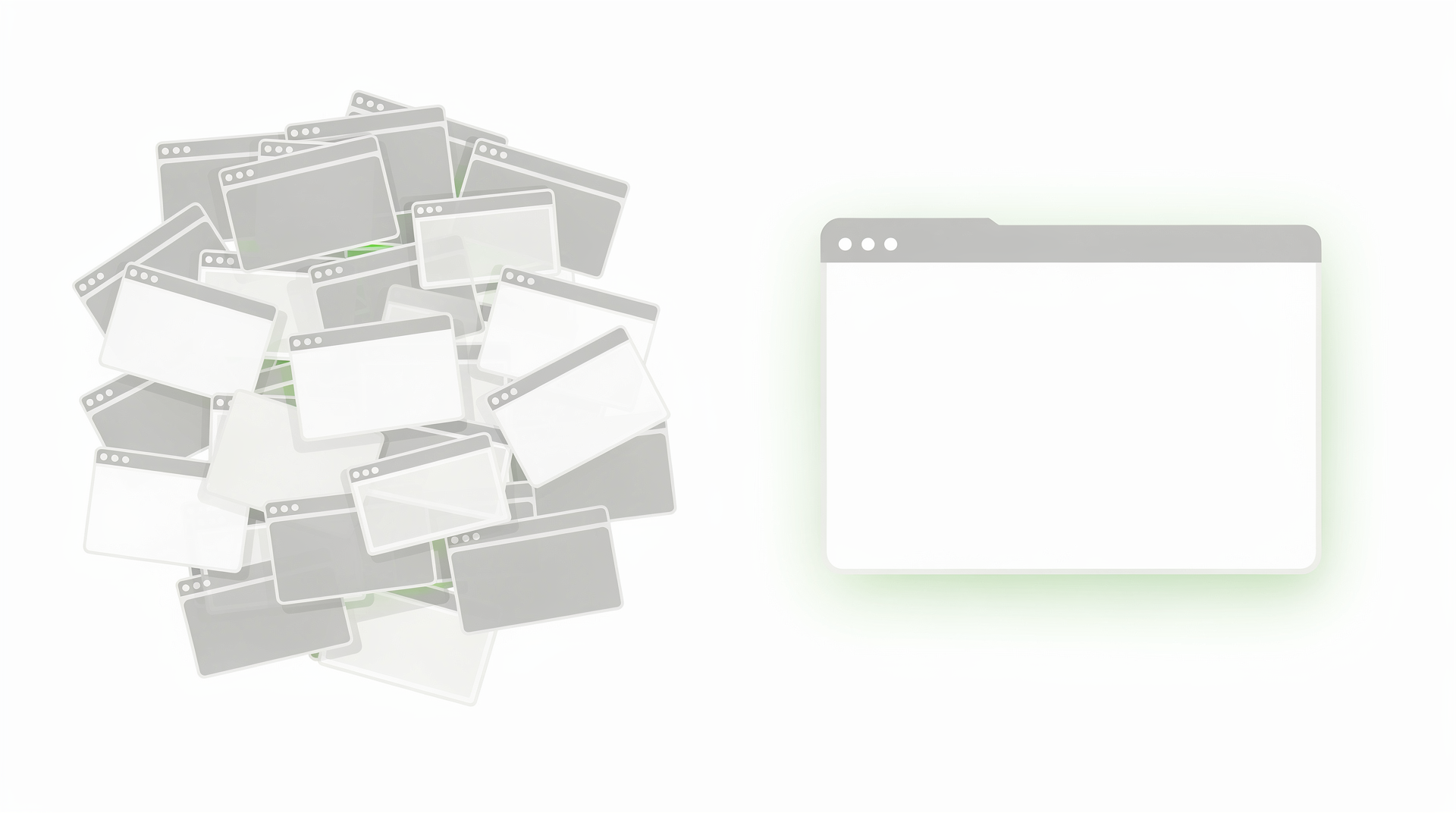
When poor sleep adds to overload — fog intensifies. Then willpower alone isn’t enough: you need rest and fewer daytime tabs.
The topic overlaps with «Sleep but no energy» and hyper-responsibility: when «everything is on me», there are already too many tabs.
Procrastination: not laziness, resource saving
«Did nothing again, I’ll just sit here till evening» — familiar? Procrastination with burnout looks like laziness or weak character. It’s not missing discipline but protection: the brain avoids high cognitive-cost tasks.
Image: juggling ten balls with your eyes closed. A new task — another ball. The brain weighs the «price» of action: complex tasks need more cognitive resource than scrolling a feed. With burnout the system shifts to economy mode and avoids «expensive» tasks without willpower involved.
A report, a hard conversation, a project with unclear outcome — all need prefrontal work. Easier to get stuck in small stuff or a feed: less demand on the «dispatcher». Hence guilt → more tasks on the list → more fog — a vicious circle.
The way out doesn’t start with «pull yourself together» but with fewer balls: one delegated task, one release of excess control. More on the «everything is on me» mechanism — in the article «Hyper-responsibility and burnout».
Multitasking vs single-tasking
The multitasking cult promises to get everything done. Reality: the brain switches, it doesn’t parallelize. Try aloud: quickly «1 2 3… 20», then «a b c…». Easy. Now «1a 2b 3c…» — uncomfortable. That’s how a day of constant chat → mail → call → chat again feels.
The course links this to inhibiting prior activity — simply put, switching «costs» the nervous system. With burnout the price is higher: the dispatcher is already at the limit.
Single-tasking isn’t «slow living» romance but practice: one task, one timer, no incoming. Not a perfect result — a completed cycle. Dishes without a podcast, fifteen minutes on one email without a side tab. The brain relearns relief from «done», not endless switching.
We don’t promise fog vanishes in a week. But each closed cycle lowers tab noise — and you feel that in wellbeing, not «productivity» hours. Start with five minutes on one task without music or notifications: for an overloaded brain that’s training, not «meditation for show».
What to do today
If even a simple task won’t move for weeks — that’s not reason to blame yourself but a signal to lower load systematically, not only «try again».
When to see a specialist
«Maybe it’ll pass if I rest on the weekend?» — many think that when fog lasts weeks. See a psychologist or doctor if concentration and motivation don’t return for more than two–three weeks straight. Especially when simple things — replying to a message, going to the shop — take effort like complex projects.
If indifference to everything that used to bring joy (anhedonia) appears, that may signal burnout shifting toward depression — differences in «burnout and depression». With any thoughts of self-harm — immediately emergency help (112, 116 123).
See where your energy goes
The test doesn’t diagnose — it shows which of four scales is overloaded. If «responsibility» or «anxiety» tops the list, single-tasking alone isn’t enough — you need fewer tabs, not only «focus harder».
Take the burnout test · ~7 min · 4 scales · result immediately.
On the burnout page — stages, mechanisms, and what lowers energy spend.
FAQ
Is «brain fog» burnout or depression?
Fog appears in both. With burnout it’s often tied to overload and improves when load drops; with depression anhedonia appears everywhere. Only a specialist can tell for sure — tests and articles are orientation, not self-treatment.
How long does fog last with burnout?
No single timeline. For some people clarity returns when load and sleep improve; with chronic burnout unchanged, fog can last months. Recovery timelines — in the article «How long does recovery from burnout take?».
Is multitasking really harmful?
The brain doesn’t do two hard things at once — it switches. Each switch costs time and resource. With burnout single-tasking is a way to lower spend, not a «productivity hack».
What if I can't focus even on one task?
Start with a micro-action: a glass of water, five minutes by the window without your phone. The goal isn’t a report but the feeling of a completed step. If that doesn’t help for weeks — see a specialist; you may need deeper work on load and sleep.