
Individual therapy
Loneliness: Why You Feel Empty Even When Surrounded by People
You can be surrounded by people at work, at a party, or even in your own family, yet feel a piercing emptiness. This feeling isn’t a flaw in your character; it’s a biological signal from brain that it’s starving. Not for food, but for the quality social connection nervous system needs to function properly. Loneliness is a type of pain that brain processes in the very same centers as a physical injury.

Contents
Key Takeaways
Why You Feel Empty in a Crowd: Brain on "Social Junk Food"
Imagine you’re at a lavishly set table. There are exquisite dishes, beautiful tableware, and pleasant music. But all the food is made of plastic. It looks appetizing, but it’s impossible to satisfy your hunger with it. You’re sitting at a feast, starving to death. This is roughly what loneliness among people feels like. There’s communication, conversations, and smiles, but it’s “social junk food” that doesn’t give brain the nourishment it needs.
For stability, our psyche needs not just any communication, but the kind that gives us a sense of safety, acceptance, and belonging. It’s not just small talk about the weather or work tasks. It’s the moments when you can be yourself without fear of judgment, when you are heard and understood on an emotional level. It is in these moments that certain chemicals are produced in the body that literally tell the brain: “You are safe, you belong.”
The neuropeptide oxytocin plays a key role here. It’s often simplified as the “cuddle hormone” or “love hormone,” but its function is much broader. It is the molecule of social trust and calm. When we feel a sincere connection with another person—through a trusting conversation, support, or touch—our oxytocin levels rise. It reduces the activity of the amygdala, our internal “threat detector,” and provides a deep sense of “everything is okay.” When such interactions are absent, the brain experiences a deficit. You can have hundreds of conversations a day, but if none of them trigger this mechanism, you remain on “starvation rations.”
The Pain of Loneliness Isn't a Metaphor: How the Brain Reacts to Isolation
When you bump your shin on a table, you feel pain. When a significant person rejects us or we feel like an outsider in a group, we also talk about pain—”heartache.” It might seem like a figure of speech. But research shows it’s not.
In 2003, neuroscientist Naomi Eisenberger conducted an fMRI experiment. Participants were asked to play a simple computer game—a virtual ball toss. At first, all three “players” (two of whom were a computer program) passed the ball to each other. Then, the program changed its algorithm, and the two “players” began to ignore the human subject, tossing the ball only between themselves. The person was socially excluded.
The brain scan results stunned the scientists. The moment the person was ignored, their dorsal anterior cingulate cortex (dACC) lit up. This is the exact same brain region that activates during physical pain—from a cut, burn, or bruise. For our brain, being rejected is literally painful. It’s not your imagination or “being too sensitive.” It’s an objective neurobiological reaction. Evolutionarily, this makes sense: for our ancestors, being cast out of the tribe was a death sentence. So, the brain developed a powerful alarm system that equates social isolation with a physical threat.
The Vicious Cycle: Why Loneliness Makes You Push People Away
Here’s the core paradox: the lonelier a person feels, the harder it becomes for them to form new connections. It seems the logic should be the opposite, but the brain works differently. Chronic loneliness is chronic stress. And a brain under stress shifts into survival mode.
Imagine you are walking through a dark forest. Every rustle, every shadow seems like a potential threat. You’re tense, ready to run or fight at any moment. The brain of a lonely person shifts into a similar mode. The amygdala, our fear and anxiety center, becomes hypersensitive. The brain starts to default to interpreting neutral or even friendly signals from others as potentially hostile.
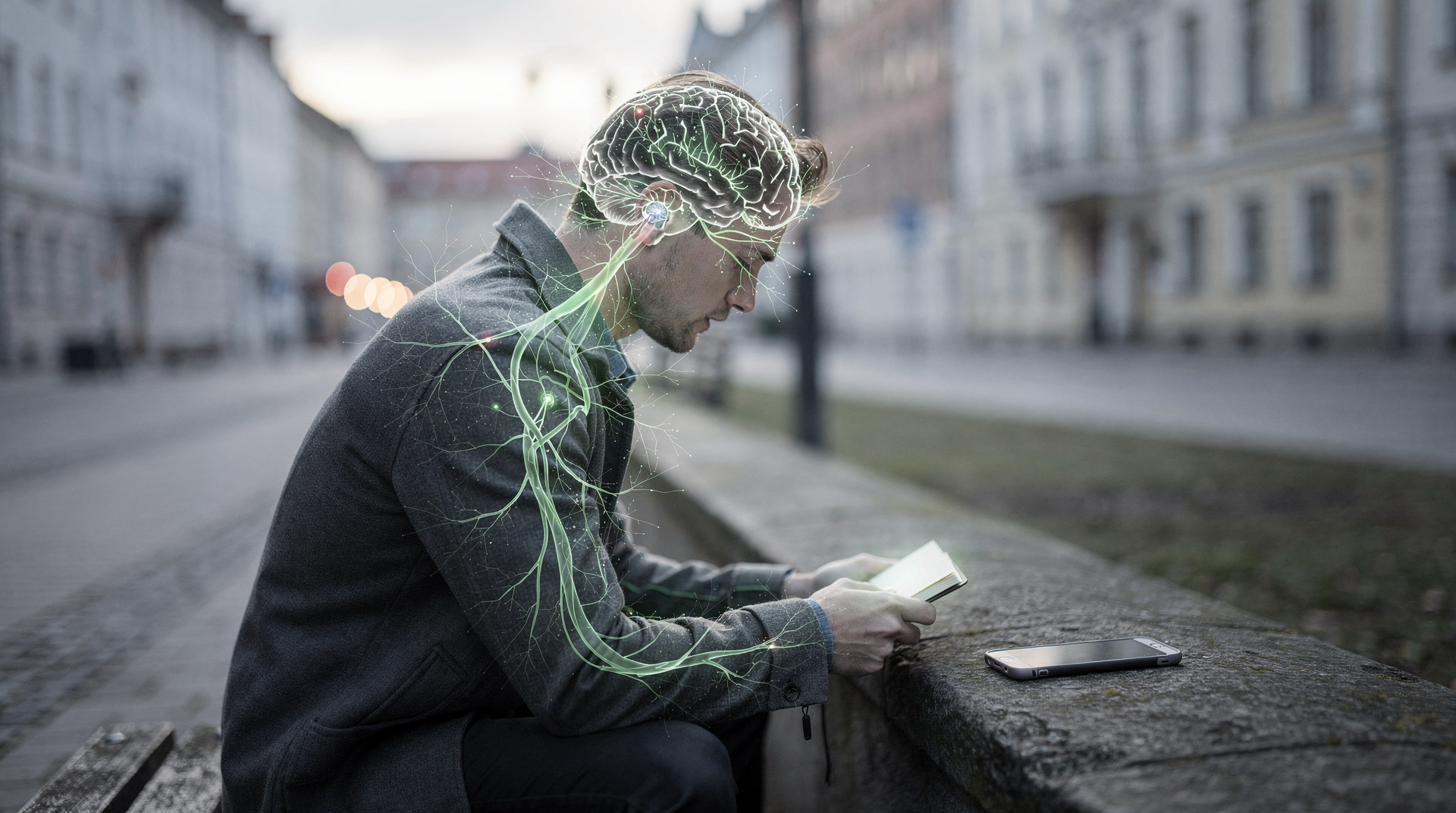
A colleague didn’t say hello in the hallway? “They despise me.” A friend didn’t reply to your message right away? “I’ve become a burden to them.” This bias isn’t a conscious choice. It’s the automatic work of a brain trying to protect you from another dose of rejection-pain. It’s as if it’s saying, “It’s better to assume everyone is an enemy than to feel that pain again.” As a result, you unconsciously start to behave in a more guarded, withdrawn, and sometimes even hostile way. People sense this and instinctively distance themselves. The circle closes: your loneliness provokes behavior that only reinforces it.
Can You Feel Lonely in a Marriage?
Yes, absolutely. Loneliness isn’t about the physical presence of someone nearby, but about the absence of emotional intimacy and understanding. If a relationship lacks deep trust, support, and the feeling that you are accepted for who you are, the brain registers a deficit of quality connection, even if you share a home with your partner.
What You Can Do Today
Breaking out of loneliness is a marathon, not a sprint. You need to start with small, safe steps to avoid overwhelming a nervous system accustomed to threat mode.
When to See a Professional
Self-help is effective, but there are situations where it’s not enough. You should consider consulting a psychologist if:
- The feeling of loneliness persists for months and becomes the background state of your life.
- You notice you’ve started avoiding all social contact, even activities you used to enjoy.
- Loneliness is accompanied by other symptoms: apathy, sleep disturbances, loss of appetite, or thoughts about the meaninglessness of life. This could indicate the onset of depression.
- You understand the logic of what to do, but nothing changes internally, and old behavioral patterns prove stronger.
In a session, we won’t be “looking for friends” for you. We will identify the specific neural “programs” that are causing brain to operate in isolation mode and find concrete, personalized ways to “recalibrate” it. This involves working with deep-seated beliefs about yourself and others, which allows you to break out of the vicious cycle.
If you feel your condition is becoming unbearable, please seek emergency help.
I offer consultations both online and in person in Tallinn. You can choose the format that works best for you.
Frequently Asked Questions
Is loneliness the same as depression?
No, but they are related. Loneliness is the pain caused by a lack of social connection. If this state persists, it can become a key factor in the development of clinical depression, which is a more complex disorder affecting mood, motivation, and physiology.
Why do I feel lonely after moving to a new city, even though I'm a sociable person?
Because loneliness is not about sociability as a personality trait, but about the presence of deep, trusting bonds. When you move, you lose your established “tribe”—the people around whom brain felt safe. New, superficial acquaintances can’t immediately replace that loss, even if you make them easily.
Can social media make loneliness worse?
Yes, it can. Social media creates the illusion of connection but often lacks the emotional depth the brain requires. Seeing idealized images of others’ lives can intensify your own feelings of isolation and inadequacy, feeding your “social pain” rather than soothing it.
I'm an introvert and need a lot of time alone. Does this mean I'm doomed to be lonely?
Absolutely not. Introversion is not the same as loneliness. Introverts recharge their energy in solitude, but like extroverts, they still need quality social connections. The difference is that an introvert might only need one or two very close friends, rather than a large group, to not feel lonely.