
Burnout
Hyper-responsibility: why «everything is on me» drains your brain
«If not me — then who?» «They’ll do it worse anyway». «Easier to do it myself». When hyper-responsibility and burnout go together, it’s not random. «Everything is on me» is often not a personality trait but a way to keep anxiety under control. The consequence — a prefrontal cortex that never rests and an accumulated cognitive resource deficit. If this sounds familiar, we’ll unpack the mechanism without moralizing.
We’ll explore the mechanism, signs, and practical steps — not the slogan «just let go». This isn’t weakness — it’s overload of the brain’s «dispatcher». More on the burnout page.

Contents
Key points
Hyper-responsibility: not character, but control
Hyper-responsibility isn’t inborn reliability — it’s a way to keep anxiety under control. You take on more than is objectively your responsibility: others’ mistakes, others’ deadlines, «what if they don’t do it». Outwardly, you appear dependable. Inwardly, you’re constantly scanning for risks.
This isn’t how the brain naturally operates. Often the pattern developed from experience: in childhood or at work, «holding everything» was a strategy to avoid failure and disappointment. The amygdala learned: control = safety. In adulthood, this signal persists even when there’s no real threat.
Difference from normal responsibility: you don’t just do your part — you back everyone up, double-check, «finish for others». Working memory is full of other people’s processes. This isn’t a virtue; it’s dispatcher overload.
It overlaps with persistent guilt: when something goes wrong, you’re the first candidate for blame, even when it wasn’t yours. Guilt and control feed each other — one keeps the other alive.
Why «everything is on me» drains your brain
Constant control is the prefrontal cortex’s most expensive job: keeping others’ tasks in mind, running «what if» scenarios, and not letting go of details. Each mental «tab» spends cognitive resource. With too many tabs open, the dispatcher can’t recover between decisions.
Metaphor: a browser with fifty open tabs. Technically on, but sluggish. The prefrontal cortex is your dispatcher: months without closing these mental tabs means no recovery — only an accumulated energy deficit. You may sleep eight hours, but if the tabs stay open, you wake up with «everything is on me» again.
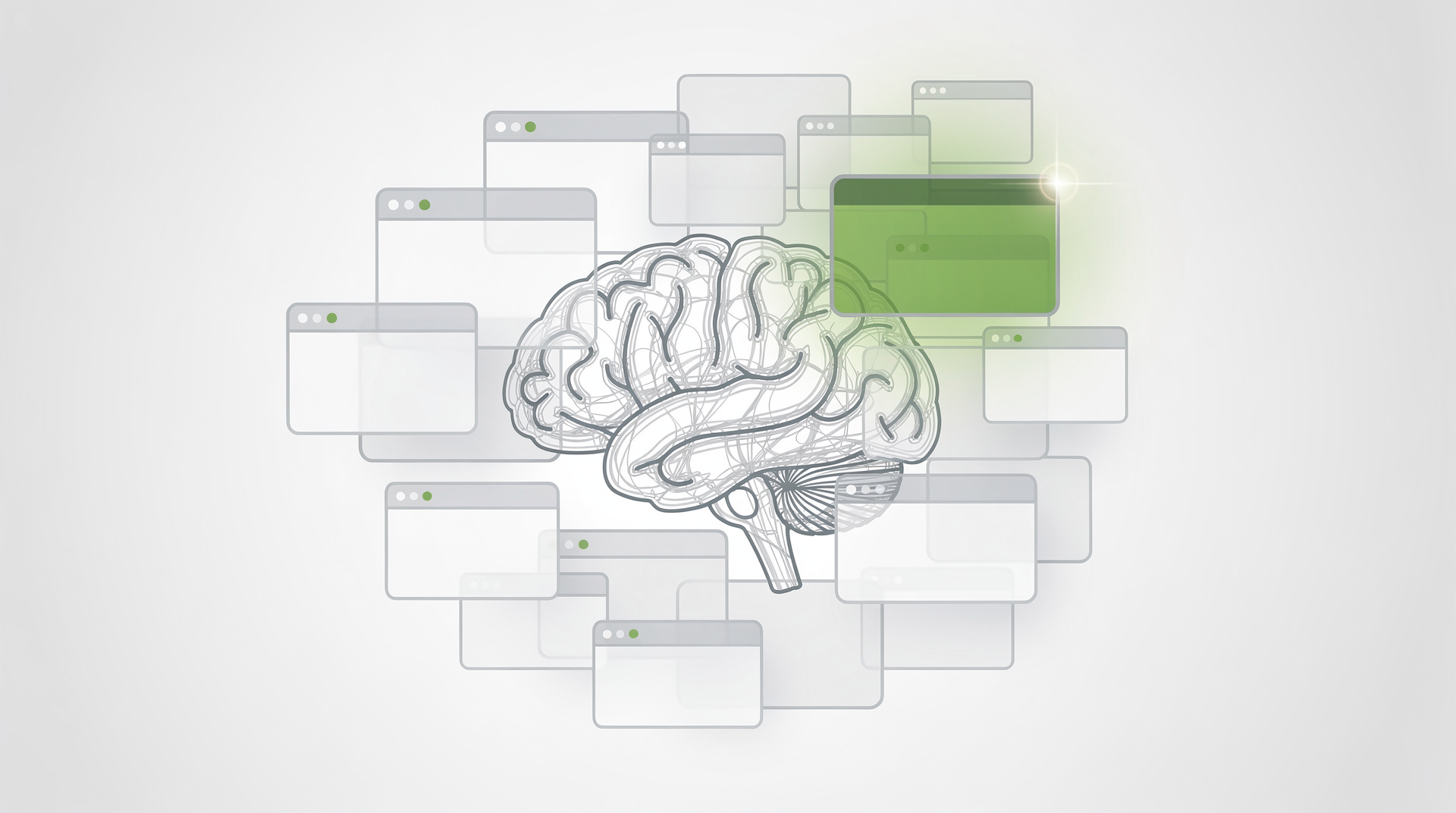
Meanwhile stress and anxiety keep the system on edge. Sleep doesn’t alleviate the burden if you take on extra responsibilities again during the day. Hence hyper-responsibility and burnout: not «lots of work», but lots of control on top of work.
Chronic control blocks slow-wave sleep — the phase when the hippocampus «packs» daytime events into long-term memory. Instead of archiving, the brain loops unfinished tasks — hence the feeling of «always in progress».
Signs of the trap
You don’t delegate — with the thought «faster myself», even when it’s objectively not true. «By the time I explain, I’ll be done», «they’ll just ask again». The brain doesn’t trust others’ outcomes and keeps the task in working memory.
Perfectionism on small things — an hour spent on a fix nobody needs. «What if they notice the flaw», «it has to be perfect». Fear of error blocks completion.
Guilt over others’ mistakes — a colleague made an error, and you feel you «should have controlled» the situation. «I knew they couldn’t handle it», «this is my zone, I’m accountable».
Resting but with work on your mind — planning during vacation, «mentally finishing» tasks on weekends. «Monday will be brutal», «can’t forget the meeting». The dispatcher never switches off.
Irritation when asked to rest — because rest without control feels like risk. «Easy for you to say», «I have so much to do», «if I rest, everything falls apart».
Resentment «I’m not valued» — you carry more than others, but gratitude is scarce. «I do so much for them», «nothing would work without me». Often a sign the boundary between «mine» and «theirs» blurred long ago.
Errors on small things — when the dispatcher is overloaded, attention suffers: typos, forgotten meetings, «oh, I knew that». «Head like a sieve», «never used to be like this».
If you recognize yourself in three or more of these signs, and fatigue has lasted for months — consider your dispatcher load, not just your «character». Compare with fatigue vs burnout to see if you’re writing off exhaustion as «that’s just who I am».
What to do
If things worsen over time — see a psychologist, not just «pull yourself together». For urgent assistance — emergency help (112, 116 123).
See where your energy goes
Hyper-responsibility rarely occurs in isolation — often with anxiety, poor sleep, bodily symptoms. The test doesn’t provide a diagnosis — it indicates which of four areas is most overloaded. If «responsibility» tops the list, start with one delegated task, not abstract «work on yourself».
Take the burnout test · ~7 min · 4 scales · result immediately. If the responsibility scale tops the list — start with one delegated task this week.
On the burnout page, you’ll find burnout stages, mechanisms, and what actually helps the brain. There’s also how responsibility links to anxiety and sleep, if you want the full picture.
FAQ
Is hyper-responsibility a personality trait?
No. It’s a learned strategy — often controlling anxiety. Strategies can change like habits, not «rewriting character». Many «reliable» people were the only ones who «held the line» as children — the brain carried the pattern into adult life without review.
How does it lead to burnout?
The prefrontal cortex operates without rest; cognitive resource doesn’t recover between tasks; stress and anxiety keep the system tense. Outwardly «I do a lot»; inwardly dispatcher exhaustion, not just muscles. Over time decision quality drops, cynicism and procrastination grow — the brain economizes remaining resources.
Why can't I delegate?
The brain perceives delegation as a risk: «if they mess up — I’m to blame». Until anxiety outweighs trust, the hand won’t release the task. Start with one small, non-critical task — safer for the nervous system. After the first «imperfect» outcome the world survived, the dispatcher gets a weak but important signal: control ≠ survival.
Are boundaries enough?
Boundaries help if the actual volume of control you exert also decreases. «No» to a new task without letting go of an old one only adds guilt. You need tab closure too, not just words. Otherwise you say «no» with your mouth but hold the same ten processes in your head.