Psychology and health
Can a daily routine reduce symptoms of depression — and even pain? A new study
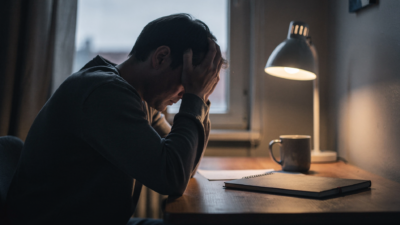
Sometimes a day quietly loses its shape. Breakfast happens when you remember it. Conversations are squeezed between messages. You go to bed not because you feel sleepy, but because you have finally run out of energy.
Against that background, “you just need a routine” can sound almost insulting — as though feeling unwell comes from not loving your alarm clock enough. A new study adds a more useful detail: older adults with more regular daily rhythms reported less pain and fewer symptoms of depression.
That is not a treatment recipe. It is, however, a reason to look more closely at the shape of your day. A routine may be less of a test of discipline and more of a handrail that helps the body and mind spend less energy.

Contents
What the researchers found
Can a daily routine reduce pain and depressive symptoms?
We cannot yet say that a routine itself reduces pain or depressive symptoms. The study found an association: people with more regular daily rhythms reported better wellbeing. Establishing cause and effect would require studies that deliberately change participants’ routines and then examine whether their symptoms change.
The useful everyday conclusion is more modest. You do not need to redesign your entire schedule. You can test whether one or two reliable points in the day give you a little more support.
What the study actually examined
The study, published in the Journal of Behavioral Medicine, included 67 people with a mean age of 68.3 years. Thirty-seven participants had insomnia, while 30 were classified as good sleepers.
Participants rated the regularity of their sleep, meals, and social contact, as well as their pain, depressive symptoms, and other measures. In this sample, people with insomnia reported more pain and more depressive symptoms. More regular behavioural and social rhythms were associated with less pain, fewer depressive symptoms, and a lower body mass index. The statistical association did not depend on whether someone was in the insomnia group.
This was a snapshot, not a film. The researchers did not assign a new routine or observe what happened after introducing one. They also did not measure daily rhythms with wearable devices. Self-report matters — pain and mood are experienced by the person. But it does not turn an observational study into an experiment.
What might explain the link
There are at least three possible directions. First, a more predictable day may genuinely support sleep and general wellbeing.
But the arrow may also point the other way. When pain is milder, mood is steadier, and more energy is available, it is easier to get up, eat, walk, and see people at roughly the same time. When you feel unwell, even a simple routine starts to fragment: plans are cancelled, sleep shifts, and meals depend on when you manage to get up.
Other evidence also supports a two-way relationship. In a prospective Rotterdam study, disrupted 24-hour activity rhythms and sleep predicted an increase in depressive symptoms, while more severe symptoms predicted further disruption to rhythms and sleep. It did not examine exactly the same everyday habits as the newer study, but the result supports movement in both directions.
A third factor could also affect both sides: physical health, medication, activity levels, support from other people, or the need to follow a work schedule. That is why “stick to a routine and you will feel better” closes the question too early.
Why regularity may still matter
Imagine climbing a staircase in dim light. A routine is the handrail. It does not heal an injured leg or switch on the light, but it gives you something to hold on to.
When the timing of waking, eating, working, and resting keeps changing, the day demands dozens of small decisions: when to eat, whether to keep working, whether it is time for bed, whether to answer now, whether to postpone a meeting. A few recurring points remove some of those questions. We do not need a story about “rebooting the brain” to understand that everyday benefit.
The study authors also offer a biological explanation. Sleep, meals, activity, and social contact may act as time cues for the circadian system — the body’s internal clock. The study did not measure circadian synchronisation, however. This is a possible mechanism, not a proven route from breakfast at a fixed time to less pain.
How to test the idea without turning it into another discipline challenge
News like this can make an ideal schedule seem tempting: waking, breakfast, a walk, and bedtime all planned to the minute. Two days later one item slips, and the routine becomes another way to tell yourself that you “did not try hard enough”.
It is more useful to choose one or two anchors that are genuinely within your control:
If the main issue is not your schedule but waking unrefreshed despite enough sleep, start with “Sleeping eight hours but still tired: what to check”.
If you have insomnia
The idea of routine needs particular care here. Someone decides, “If consistency matters, I will go to bed at eleven every night.” They then spend two hours awake, frustrated, and watching the clock. The bed gradually becomes a place of struggle.
Guidance from the US National Heart, Lung, and Blood Institute describes a more precise approach. A regular sleep-wake cycle is combined with stimulus control: going to bed when sleepy and not staying in bed for a long time when sleep does not come. Cognitive behavioural therapy for insomnia, or CBT-I, is usually considered the first treatment for chronic insomnia.
A routine can therefore be part of treatment. Forcing yourself to sleep by the clock and treating insomnia are not the same thing.
When a routine is not enough
Persistent or worsening pain should be discussed with a family doctor, rather than explained only by stress or an irregular schedule. The same applies to long-term insomnia, severe daytime sleepiness, or a noticeable loss of ability to manage ordinary tasks.
Low mood is not a failure of discipline either. If you have lost interest in things that usually matter to you, or work, relationships, and self-care have become difficult, the depression page explains the symptoms and possible next steps in more detail.
If you want to understand what is disrupting your days — sleep, pain, workload, mood, or a combination — you can book an online consultation. If you are thinking about self-harm, face immediate danger, or cannot keep yourself safe, use the emergency help contacts in Estonia; call 112 if the danger is immediate.
Frequently asked questions
Should I wake up and go to bed at the same time every day?
A reasonably steady wake-up time can be a useful anchor. With insomnia, however, there is little value in spending hours awake in bed simply to obey a fixed bedtime. If the problem has become chronic, it is better to use CBT-I principles and discuss an individual plan with a professional.
Does the result apply to younger people?
It cannot be transferred directly: the participants’ mean age was 68.3 years. People of any age can cautiously test whether more regularity helps them, but that is a practical hypothesis, not a conclusion from this study.
Can a routine replace treatment for depression or chronic pain?
No. A routine may be one source of everyday support, but the study did not test it as a treatment. Persistent pain and pronounced depressive symptoms need their causes assessed separately and appropriate help.