
Individual therapy
Lack of Motivation: It's Not Laziness, It's a Brain Signal
Does this feel familiar? Your to-do list is growing, deadlines are looming, yet you find yourself staring at a wall, unable to even start. mind knows you “have to,” but body sabotages every effort. A lack of motivation isn’t a moral failing or a weakness of character; it’s a protective reaction from brain, signaling that its resources are critically low or that its reward system has malfunctioned. This isn’t laziness—it’s a biological mechanism that you can and should understand.

Contents
Key Takeaways
Why "I Have To" Doesn't Work: Brain is a Strict Accountant
Every morning, you wake up thinking, “Today’s the day I’ll finish that report / start jogging / clean the balcony.” But the day passes, and you find yourself watching a series, feeling guilty and powerless. Why does this happen, even if you’re a smart, responsible person who understands the importance of these tasks?
The truth is, your conscious mind—your rational self—is just the tip of the iceberg. The real decisions about action or inaction are made by more ancient brain structures that operate like a rigorous accounting department. Imagine your prefrontal cortex is the chief accountant who issues an “energy loan” for any action.
Before releasing these resources, it asks a simple question: what is the expected profit? The currency for this profit is the neurotransmitter dopamine. It’s crucial to understand that dopamine isn’t the “happiness” hormone you get from a completed task, as is commonly believed. It’s the hormone of anticipation of a reward.
When the brain predicts that an action will yield a quick and significant result, it generously releases dopamine. You feel a surge of energy, enthusiasm, and a desire to act. But if a task looks like “a lot of work, a long wait, and no guaranteed result” (like writing a thesis or losing 20 kg), the brain-accountant says, “This is an unprofitable deal. Loan denied.” You experience this as a total lack of motivation.
This isn’t your weakness; it’s a biochemical energy-saving mechanism. brain is protecting you from a potentially pointless waste of precious energy. Therefore, trying to “get a grip” and force yourself to work through sheer will is a battle against your own neurobiology. It’s futile and exhausting.
"Cheap Dopamine": How Social Media and Sugar Steal Your Willpower
“Okay,” you might say, “but I used to have energy for everything. Why do I now lack motivation even for simple things?”
Here, we encounter the second part of the problem: dopamine inflation. Our brains, evolved in an environment of scarcity, were not prepared for a modern world where a reward is just a click away. Social media, short videos, video games, pornography, and sugary, fatty foods are all sources of “cheap dopamine.”
It’s like comparing healthy food to fast food. To get pleasure from broccoli, you have to be genuinely hungry. A cheeseburger, however, is always tasty. Similarly, to get dopamine from work, you need to focus, apply effort, and overcome difficulties. But to get it from your Instagram feed, you just have to swipe your finger across the screen.
When you constantly bombard brain with easy stimulation, the same thing happens as with any addiction: a desensitization of receptors. They become less sensitive. Now, to feel the same level of anticipation and desire, you need a bigger dose. And your dopamine system simply stops responding to “difficult” goals that require effort. It has been “spoiled” by easy wins.
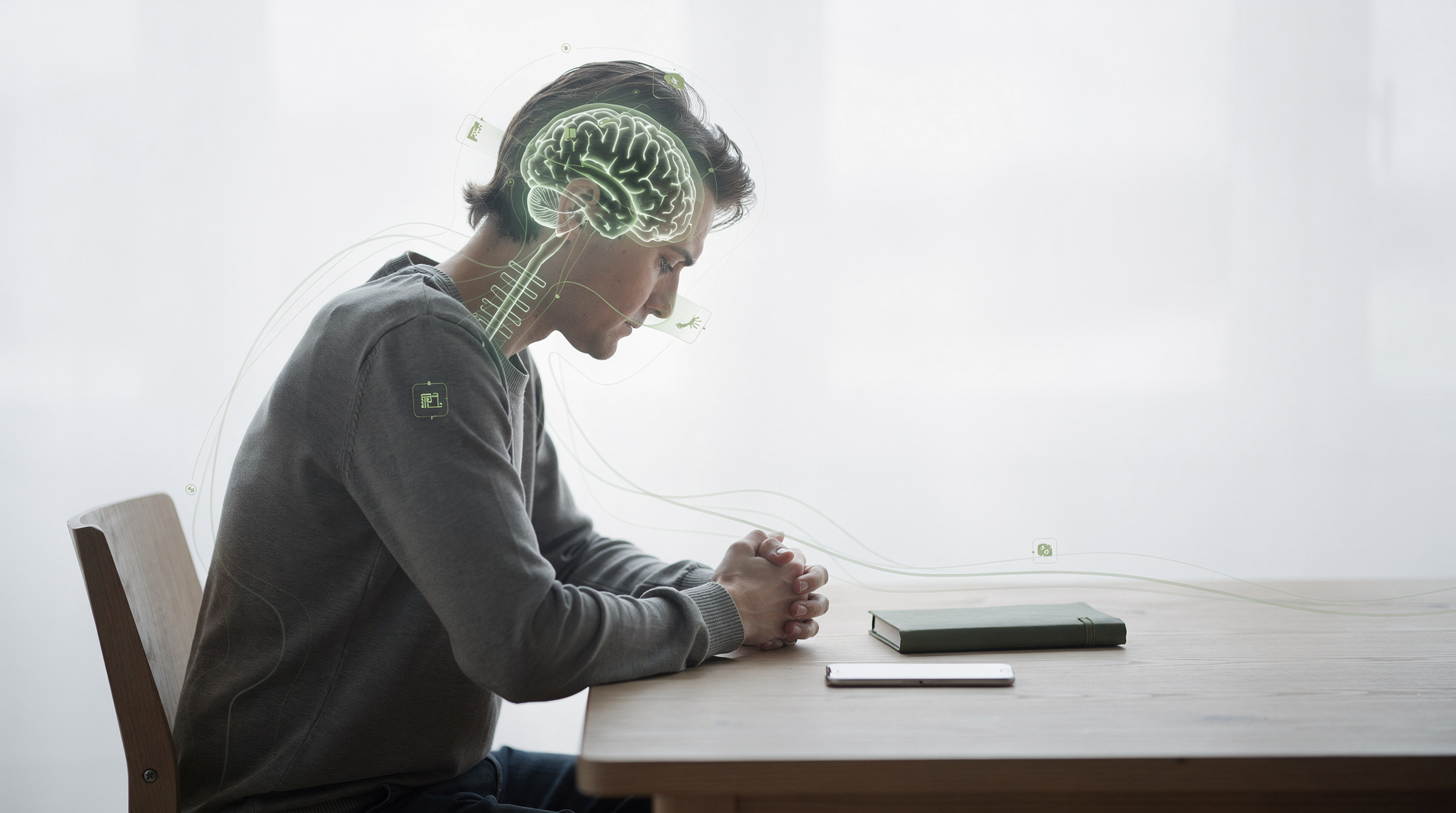
Ultimately, you fall into a trap. Work seems unbearably boring and difficult because it doesn’t offer an instant reward. The only thing you have energy for is reaching for your phone or the fridge for another quick “hit.” The cycle is complete. You are not a person without willpower; you are a victim of a dopamine trap that you can and must escape.
How to Quickly Regain Motivation When You Don't Feel Like Doing Anything?
You can’t “quickly” regain motivation if it’s gone due to exhaustion—that’s like trying to instantly start a car with an empty fuel tank. The first step is not to force yourself but to stop demanding. The goal is to reduce the load and temporarily remove sources of “cheap dopamine” (social media, sugar). This will allow brain to begin restoring the sensitivity of its reward system.
The Achiever's Syndrome in Reverse: When the Brain Decides Trying Is Pointless
Sometimes, a lack of motivation isn’t just a result of fatigue or dopamine overload. It’s a learned belief, ingrained at the level of neural pathways, that says, “No matter what I do, things won’t get better. So, there’s no point in even trying.”
This phenomenon was discovered in the 1960s by psychologist Martin Seligman and is called learned helplessness. In his classic experiments, dogs that couldn’t escape a mild electric shock eventually stopped trying to flee, even when the opportunity was presented. They would just lie down and whimper, passively accepting the discomfort.
The human brain works in a similar way. If you have repeatedly faced situations where your efforts led to no result, brain forms a stable neural connection: “effort = pain/failure/being ignored.”
- You worked for years in a toxic environment where your initiatives were punished.
- You tried to fix a relationship with a partner who devalued you.
- You launched project after project, but they failed due to external circumstances.
At some point, the brain-accountant concludes: the investments are not paying off, the asset is unprofitable, we’re closing this division. And it stops releasing dopamine for any actions related to that area. This isn’t depression in the clinical sense (though it can lead to it), but an adaptive reaction—a defense against a pointless waste of your last reserves of strength.
In such a state, your inner voice sounds less like “I don’t want to” and more like “What’s the point?” “Why bother trying at work if I won’t be appreciated anyway?” “Why start dating if all relationships end the same way?” This is a deep, existential level of apathy that is rarely cured by simple rest. It requires “retraining” the brain by creating new experiences where effort leads to a small but guaranteed success.
What to Do Today: 3 Steps Out of the "Pit"
If you feel stuck, don’t try to perform a heroic feat. The goal is to get the rusty mechanism moving with small, almost imperceptible actions. Here are three steps that don’t require willpower but help restart the reward system.
When It's Time to See a Specialist
Self-help is effective, but there are situations where an outside perspective is necessary. A lack of motivation can be more than a temporary slump; it can be a symptom of deeper problems like burnout or clinical depression.
You should consider consulting a psychologist if:
- Apathy and indifference last for more than a few weeks and don’t go away even after rest.
- You’ve stopped enjoying things that used to bring you joy (hobbies, socializing, food). This is known as anhedonia.
- The lack of energy interferes with basic daily tasks: working, personal hygiene, maintaining your home.
- Apathy is accompanied by other symptoms: changes in sleep or appetite, constant anxiety, feelings of hopelessness, or tearfulness.
If you feel desperate or thoughts about life’s meaninglessness become overwhelming, please don’t face it alone. You can find contacts for emergency services here.
In a consultation, a psychologist won’t “motivate” you with slogans. Their job is to work with you to audit your life and brain’s functioning. Together, we can find where the resource “leak” is happening, what negative experiences have caused brain to “give up,” and build a strategy to restore a healthy reward system. This isn’t magic; it’s painstaking engineering work to adjust your psyche’s settings.
You can choose the format that works for you—an online consultation or a session in Tallinn—to begin this journey.
Frequently Asked Questions
Can a lack of motivation be a symptom of depression?
Yes, it can. Persistent apathy and anhedonia (the inability to feel pleasure) are key markers of a depressive disorder. If this state lasts for more than two weeks and is accompanied by a low mood and changes in sleep or appetite, you should consult a specialist for an accurate diagnosis.
Why don't tips like "just start" or "make a plan" work?
Because they appeal to willpower and rational thinking, while the root of the problem lies at the level of brain biochemistry. It’s like trying to make a car run on positive thinking when it’s out of gas. The problem isn’t the lack of a plan but the lack of “fuel” (dopamine) and a malfunction in the reward prediction system.
I only procrastinate at work, but I have energy for hobbies. What's that about?
This is a classic example of selective motivation that perfectly illustrates the “brain-as-accountant” theory. brain assesses work as an “unprofitable deal” (high effort, delayed reward) and hobbies as a “profitable” one (quick pleasure, low cost). This is not a sign of laziness, but of a critical imbalance in the cost-reward system specifically within your professional life.
How long does it take to restore motivation?
It’s an individual process that depends on the depth of your exhaustion. This is a marathon, not a sprint. The first positive shifts from a “dopamine diet” and stress reduction can be noticed within 1-2 weeks. However, if we’re talking about overcoming learned helplessness, “retraining” the brain and rebuilding self-confidence can take several months of systematic work, often with the support of a psychologist.