
Articles
Low Self-Esteem and Psychology
Low self-esteem isn’t a “lack of self-love,” but rather the result of a chronic psychological defense mechanism that was once necessary. Our brain, like a seasoned strategist, adapts to conditions to minimize potential harm and ensure survival. Sometimes, this defense becomes excessive and starts working against us, creating an internal barrier that prevents us from seeing our own worth. It’s not a flaw, but an outdated, albeit deeply ingrained, algorithm.

Table of Contents
Key Takeaways
Low Self-Esteem as a Defense Mechanism
Imagine you’re an old, battle-scarred medieval castle. You’ve endured enemy invasions, fire, and betrayals. In response, your security system became hyper-vigilant. It started seeing threats around every corner, in every shadow. It lets no one in, not even those who come in peace. This is exactly how low self-esteem works: it’s not a defect in you, but an overly cautious (and outdated) defense system brain built to shield you from pain.
“Why do I constantly criticize myself? It’s not normal!” you might think. Meanwhile, brain continues: “It’s better if I scold myself than if someone else does. That way it’ll hurt less, and I can prepare myself for it.” This isn’t a conscious decision. It’s a deeply ingrained algorithm that was activated in the past, when you might have faced rejection, criticism, or failures. It’s like an old alarm system that goes off at every rustle, even though there’s no real threat anymore.
This mechanism forms in early childhood. If a child frequently hears criticism or devaluation, if their achievements are ignored, and mistakes punished too severely, their brain learns. It learns to stay one step ahead of potential pain, forming an internal “saboteur.” This “saboteur” is actually your old, well-meaning, but currently ineffective protector. It constantly keeps you on edge, but does so with the best intentions: to prevent things from getting worse. The problem is, it long ago stopped differentiating between a real threat and the simple opportunity to live and thrive.
When you start to see that low self-esteem isn’t a life sentence or a weakness, but rather an outdated, yet firmly established algorithm that mistakenly “protects” you, that very realization becomes a point of leverage. You’re not broken; your firmware just needs an update. It’s not about “not loving yourself;” it’s a mechanism that’s trying too hard to keep you safe. And it can be reconfigured.
The Brain: How It Shapes Your Self-Esteem
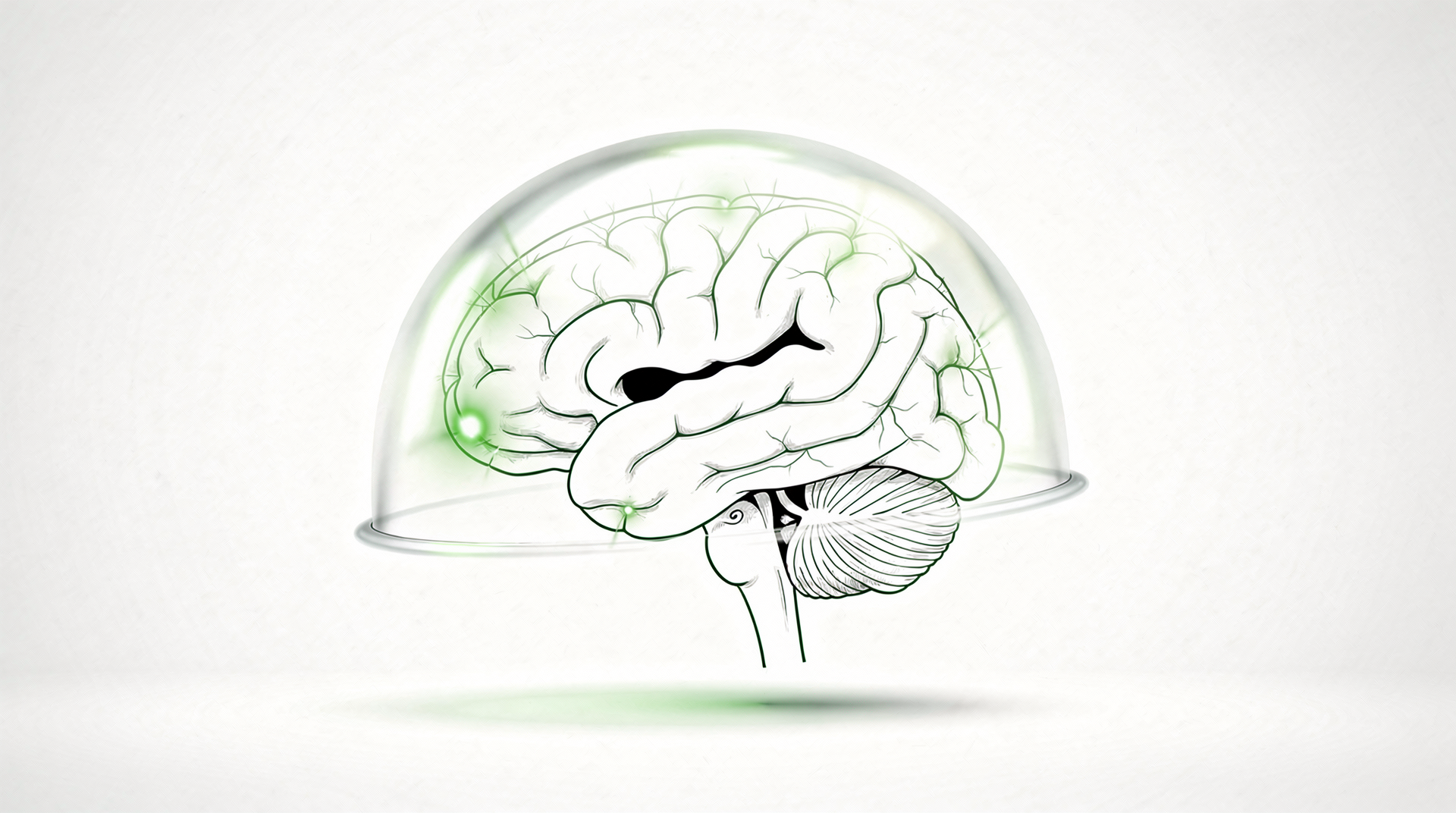
Imagine brain is a colossal library. Each book within it is an experience, each page a thought, each underline an emotion. Your beliefs about yourself aren’t just a few sentences on one page. They’re an entire series of volumes, written since childhood, where each new volume references and confirms the previous one. “I’m not good enough,” “They don’t trust me,” “I’ll definitely fail” – these aren’t just phrases; they are formed neural pathways through which signals race.
When you try to convince yourself otherwise, brain might effectively respond: “Sorry, but I have an entire library of evidence here that you’re wrong.” This isn’t because you are wrong, but because the brain always takes the path of least resistance. It prefers to use already established, well-worn pathways. These pathways, or neural connections, have been formed over years, strengthened by experience and emotions.
For example, if as a child you received a negative reaction to your initiative, brain recorded: “Initiative = danger.” The next time you even think about suggesting something, amygdala – the ancient part of the brain responsible for instant threat assessment – will send an alarm signal before you even realize what’s happening.
This leads to the release of cortisol, a stress hormone that not only mobilizes the body but also makes you instantly retreat or freeze to avoid the perceived danger. Essentially, the brain prefers to proactively expend energy on anxiety rather than let you “get burned” again. Thus, cortisol becomes the conductor of this self-sustaining cycle, where stress is not just a feeling, but a physiological reaction that reinforces avoidance behavior.
To change this, you need to “forge new pathways.” It’s possible but requires effort and consistency. For example, when you consciously take small actions that lead to success, brain starts recording new experiences: “initiative = success.” Each small success, even if it’s just a successfully completed task or a compliment, generates dopamine – a neurotransmitter responsible for reward and motivation. When dopamine is released, it reinforces new neural connections, making them stronger. Over time, the new “positive” pathways will become as well-traveled as the old “negative” ones, and brain will start choosing them by default.
Distortion of Reality: Perceptual Filters
Our brain isn’t a simple information receiver. It’s more like a film director constantly editing the movie of our lives. When self-esteem is low, this director uses special filters: the negative is amplified, the positive is ignored. You succeeded on a project? “It was just luck” or “anyone in my position would have managed.” You received praise? “They’re just being polite” or “I don’t deserve it.” You made a mistake? “I’m useless!”
These are cognitive distortions that become entrenched because the brain prefers to confirm existing beliefs. This approach conserves energy, as it doesn’t need to reconstruct its entire belief system. It’s like buying binoculars with only two lenses: one makes everything look bad, and the other makes things invisible. You don’t see the world as it truly is; you see it through your internal filters.
One such filter is “catastrophizing.” This is when brain, like an experienced thriller screenwriter, instantly constructs the worst-case scenario. “I’ll forget someone’s name – they’ll despise me – I’ll be alone forever.” The prefrontal cortex is responsible for this, but not by itself. It merely becomes an instrument for a negative forecasting system that relies on past experiences. When you’ve experienced something unpleasant, the brain generates a prediction error signal. The next time, to avoid repeating the pain, it “predicts failure” in advance, creating a detailed negative scenario meant to protect you. But instead of salvation, you only get increasing anxiety, and no real action is taken because the brain has already “played out” the worst outcome.
These distortions perpetuate low self-esteem, creating a vicious cycle. The more you focus on the negative, the stronger the neural connections responsible for that focus become. brain becomes an expert at finding evidence of your “inadequacy.” This is why phrases like “just think positively” don’t work. It’s like trying to make someone wearing rose-tinted glasses see green just by telling them to. You first need to take off the glasses.
Recognizing that these filters exist and are actively working is the first step toward deactivating them. It’s not an instant process, but each time you catch yourself thinking, “Oh, that’s my catastrophizing at work!” or “There’s my old devaluation filter!”, you begin to weaken its influence. It’s a conscious effort that, over time, changes the way your neural networks operate, allowing you to see reality more objectively.
Learned Helplessness and Self-Esteem
Remember Martin Seligman’s experiments with dogs in the 1960s? The animals were subjected to inescapable electric shocks. Eventually, even when there was an opportunity to avoid the shock, the dogs did nothing. They had “learned” their helplessness. Our brains work similarly: if throughout your life you’ve repeatedly encountered situations where your efforts didn’t lead to desired results or even worsened them, brain concludes: “It’s useless to try. Nothing will work anyway.”
This isn’t laziness or a lack of willpower. It’s an adaptation. To avoid constant disappointment and energy depletion, the brain decides “not to waste effort.” This state is called learned helplessness.
For example, as a child, when you tried to gain parental approval but received criticism or indifference instead of praise, brain registered: “My actions don’t affect how they feel about me.” Or at work, when you put in maximum effort, but promotions or recognition never come. The belief forms: “My work isn’t valued, I can’t change anything.” This leads to apathy, procrastination, and, of course, exacerbates low self-esteem.
The main danger of learned helplessness is that it becomes a self-fulfilling prophecy. If a person is convinced nothing will change, they stop trying. Stop trying – don’t get new results – confirm their helplessness. A vicious cycle. In this vicious cycle, the dopamine-based reward system stops functioning properly. Dopamine, the neurotransmitter responsible for anticipating pleasure and motivation, is released when the brain “expects” a reward for effort. But with learned helplessness, the brain stops connecting effort with a result. It sees no “point” in activating the dopamine system because the expectation of reward is absent or blocked. This isn’t atrophy, but rather a “shutdown” – the brain simply conserves energy by not engaging the “seeking” and “motivation” systems when it repeatedly sees no purpose in action. Therefore, the person loses the internal “fuel” for new attempts and needs to re-learn to connect their actions with internal rewards.
This cycle can be broken, but not through “willpower.” You need to re-establish the connection between effort and outcome. Start with very small, but guaranteed successes. Each such success, however trivial, sends a signal to brain: “I can make a difference.” Every time you experience a sense of accomplishment, dopamine is released, gradually restoring your motivation and self-esteem system, creating new neural pathways.
What Is Healthy Self-Esteem?
Healthy self-esteem isn’t “I’m better than everyone” or “I’m always right about everything.” Let’s discard those myths immediately. Healthy self-esteem isn’t euphoria from your own successes or an absence of doubt. It’s an adequate, realistic, and most importantly, stable perception of yourself, based on an internal sense of worth, rather than on external validation.
That is, when you don’t get a promotion at work, brain doesn’t scream, “I’m a failure, I’ll never succeed!” It will say: “It didn’t work out today. Let’s analyze what could be improved, and what wasn’t up to me.” It’s the ability to accept both your strengths and weaknesses, learn from mistakes, and maintain resilience to criticism without falling into self-loathing. And, crucially, it’s not depending on external approval like air. Your intrinsic worth doesn’t diminish if someone else doesn’t recognize it. Healthy self-esteem is an internal constant that allows you to move forward, despite the inevitable external fluctuations and assessments.
What You Can Do Today
- 1. Observe your inner critic. From today, you are not your critic. You are an observer studying how it operates. Keep a small notebook or use phone notes. Throughout the day, note when you criticize yourself, what phrases you use (“I did it wrong again,” “I’m so stupid”). Try asking yourself: “What is my brain trying to tell me right now? What is it trying to protect me from?” Don’t argue with it; just record it. It’s like listening to an old record and realizing it’s just a recording, not a live event.
- 2. Notice small successes. brain is wired to seek out negativity. Start consciously looking for the opposite. At the end of the day, take 5 minutes and write down 3-5 things you accomplished — even small wins count.
- 3. One micro-step in the risk zone. Say “no” where you usually agree out of fear, or ask for help where you stay silent.
When to See a Specialist
If low self-esteem affects work, relationships, or life plans — unpack the mechanism with a psychologist. Book online or in Tallinn. In acute crisis — emergency care.
Frequently Asked Questions
Can I just "love myself"?
Usually not through slogans alone. The brain changes beliefs through experience — small steps that provide new evidence work best.
How long does improvement take?
First shifts often appear in 3–6 weeks of practice; deep patterns may take months.
When is a psychologist needed?
When you’re stuck in “I know what to do but don’t do it” or self-esteem already affects health, relationships, and income.
This article is for self-education and does not replace professional diagnosis or consultation. If low self-esteem seriously affects your life, please seek help from a specialist.