
Articles
Brain Isn't Lazy, It's Exhausted
It’s not about laziness or weak willpower—brain is literally accumulating waste products from the very act of thinking, such as excess glutamate, a neurotransmitter that normally stimulates brain activity. But when there’s too much of it, it paralyzes the brain’s ability to make complex decisions. This leads to tangible, physiological fatigue. This isn’t a metaphor; it’s a measurable chemical process involving the buildup of specific substances.

Contents
The 2-Minute Summary
Why 'Just Thinking' Is Hard Work
We’re used to separating work into “physical” and “mental,” but this distinction is arbitrary. A day spent in tense negotiations, writing a complex report, or learning new software can be just as draining as a day of manual labor. You haven’t moved much, but by evening, you feel completely wrung out. Why?
It was once thought that the brain, like muscles, gets tired from depleting its energy reserves—glucose. This idea seemed logical, but it didn’t explain why we can feel shattered even after a day spent in a chair. Modern research shows that it’s less about a “fuel” deficit and more about the accumulation of byproducts from the thinking process itself.
Imagine a bustling city during rush hour. The cars (thoughts) are moving, honking, creating activity. But all this activity produces byproducts—exhaust fumes. If the ventilation system can’t keep up, the air becomes toxic, traffic slows down, and being on the streets becomes unbearable. Something very similar happens inside brain.
The function responsible for concentration, planning, and willpower is called cognitive control. It’s housed in the prefrontal cortex—a relatively small and energy-intensive area of the brain. And this system has its limits.
The Neurochemistry of Fatigue: 'Toxic Noise' in the Brain
So, what are these “exhaust fumes” in our heads? A 2022 study in the journal Current Biology led by Antonius Wiehler sheds light on this. They hypothesized that cognitive fatigue is the result of a specific chemical building up in the part of the brain responsible for the most demanding thought processes.
In the experiment, one group of participants performed difficult cognitive tasks for six hours, while another group performed easier ones. Using magnetic resonance spectroscopy, the scientists measured the brain’s chemical composition. They found that those who performed the hard work had a significantly higher concentration of glutamate in their lateral prefrontal cortex—the area responsible for planning, decision-making, and self-control.
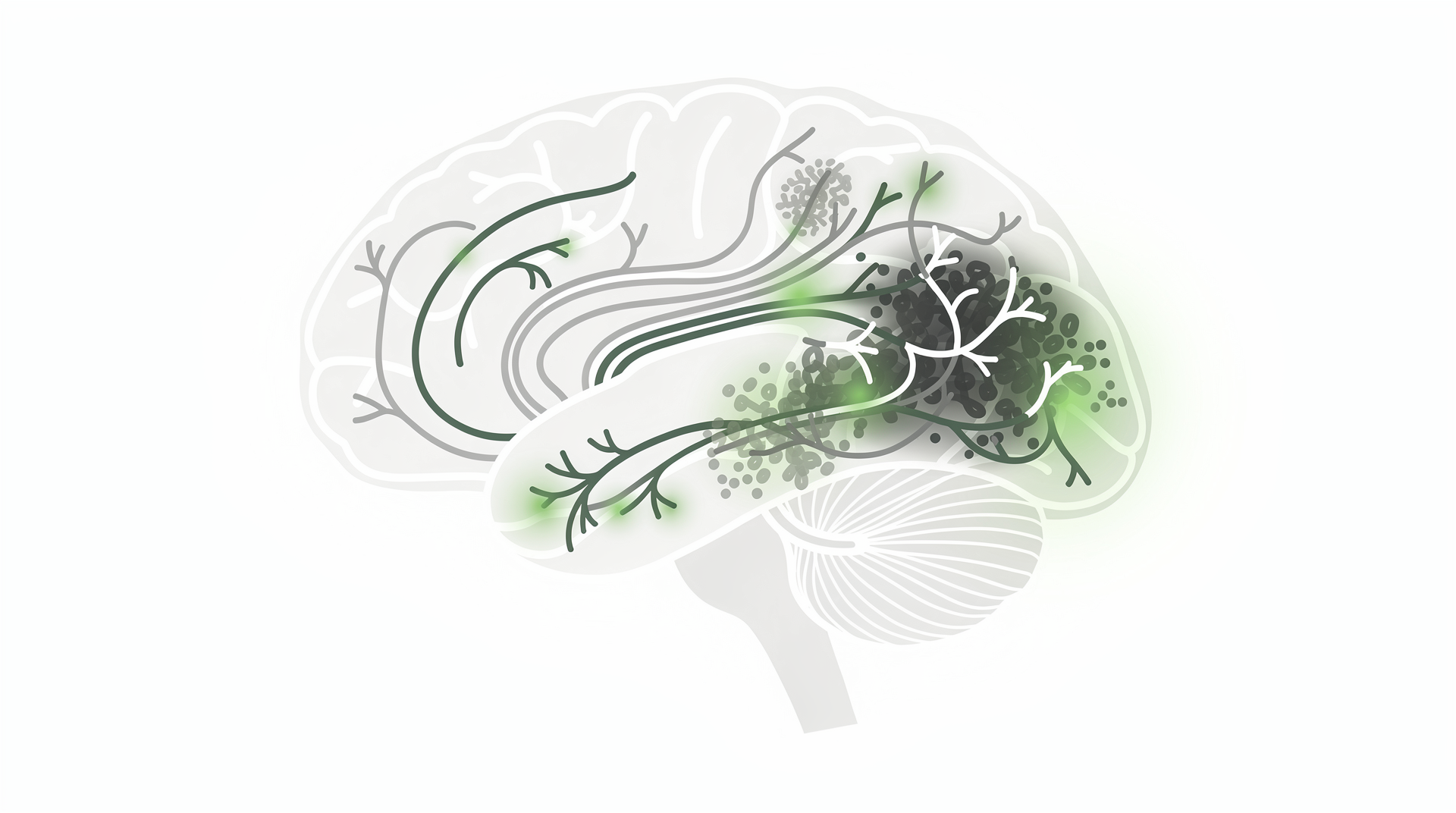
Glutamate is the main excitatory neurotransmitter in our brain; it’s absolutely essential for transmitting nerve impulses, learning, and memory. But, as with any potent substance, balance is key.
Think of a car engine. Glutamate is like the spark plugs that ignite the fuel and make the engine run. But if the sparks start firing uncontrollably, it leads to overheating, noise, and wear and tear. Excess glutamate in the synaptic clefts doesn’t just create “toxic noise”; it paradoxically starts to block further effective signal transmission between neurons. The brain interprets this as an overload signal, forcing you to slow down and stop for a “clean-up.”
This is, of course, a simplification—the process involves many other substances and hundreds of neurochemical reactions. Nevertheless, the essence is clear: the feeling that your “brain is fried” is not just a figure of speech, but a reflection of real chemical changes in your head.
Energy-Saving Mode: How Fatigue Changes Your Decisions
What’s most interesting is that the buildup of glutamate directly affects your behavior. When faced with a chemical overload, the brain performs a kind of “cost-benefit analysis.” The cost of any further mental effort skyrockets. As a result, the brain switches to an energy-saving mode.
In that same study by Wiehler, participants were periodically asked to make choices, such as receiving more money for a harder physical task or less money for an easier one. By the end of the day, the group that had performed difficult mental tasks consistently began choosing the second option—less reward, but also less effort. Their brains were literally saying, “Enough. Avoid strain at all costs.”
This explains why it’s so easy to give in to fast food in the evening, even though you planned to cook a healthy dinner that morning. Cooking involves a sequence of decisions and actions (a complex task). Ordering a pizza is a single click (a simple task). Your tired brain simply chooses the path of least resistance. This is not a lack of willpower, but a protective mechanism that prevents the prefrontal cortex from “burning out.”
This same mechanic is behind mindless scrolling on social media instead of reading a book or watching a good film. A social media feed is a stream of simple, disconnected stimuli that require no effort. A film or book requires sustained attention and making connections. For a tired brain, the choice is obvious.
Why It’s So Hard to Keep It Together by Evening
Does it sound familiar? By the end of the day, it becomes unbearable to tolerate a child’s tantrum, or you snap at a colleague in an email, even though you were the model of patience that morning. “I must be a bad parent / a terrible person,” the thought might flash. But it’s not about your morals.
This is a direct consequence of cognitive fatigue. The prefrontal cortex, which is responsible for self-control, is overloaded and “clogged” with glutamate by the end of the day. The brain shifts to its energy-saving mode, preferring impulsive, quick decisions that require less mental effort over complex, deliberate self-control.
Suppressing irritation becomes just as difficult as solving a complex math problem in the evening. brain is simply conserving its resources, and this isn’t a sign of your weakness, but its attempt to protect itself from further overload.
What You Can Do Today
Understanding the mechanism of fatigue allows you to take targeted action:
When to See a Specialist
Normal cognitive fatigue goes away after a good rest—a night’s sleep or a weekend. However, if you feel constantly drained, even in the mornings, if the mental “fog” doesn’t lift, and if your concentration and memory have noticeably worsened for weeks or months—this could be a sign of a chronic condition, such as burnout syndrome or depression. In this case, fatigue is no longer just a consequence of being overloaded but a symptom of a deeper imbalance in nervous system.
If this description feels all too familiar and rest isn’t helping, don’t wait for it to “go away on its own.” This is a reason to discuss your condition with a specialist. Sometimes, an outside perspective and a few precise questions can help reveal what’s hidden behind the veil of chronic fatigue. In a session, we can identify what exactly is overloading your system, rather than just “everything in general,” and find effective recovery strategies tailored to your situation.
You can schedule a consultation:
If you feel you are on the edge and need immediate support, don’t delay: use our page on emergency care. In such states, it is critical to get the right information and support to avoid making the situation worse.
Frequently Asked Questions
Maybe I’m just lazy?
Laziness is generally considered the unwillingness to act when you have the energy. Cognitive fatigue is a physiological inability to function effectively. If your energy returns after rest, it was fatigue.
Will coffee or energy drinks help?
Caffeine masks the feeling of fatigue but doesn’t remove the glutamate. It’s like putting a sticker over the “Check Engine” light—it doesn’t solve the problem.
Is this what “brain fog” is?
Yes, this is a common way to describe cognitive fatigue. However, brain fog can also be caused by lack of sleep, stress, or hormonal imbalances.
How much sleep is needed for the brain to “cleanse” itself?
For most adults, 7-9 hours of quality sleep is sufficient. The glymphatic system is most active during deep sleep.