
Articles
Why Can't I Relax?
You finish a tough workday, get home, collapse on the sofa… and you can’t switch brain off. Thoughts about tasks, conversations, and plans keep spinning. body feels tense, and that “on edge” feeling doesn’t go away, even on the weekend. If it feels like you’ve forgotten how to rest, you’re not alone. This isn’t about a lack of willpower or not knowing how to rest “properly.” It’s a glitch in your autonomic nervous system — the one that regulates body’s involuntary functions (heartbeat, breathing, digestion). It’s stuck in “danger” mode, and you can learn to switch it off.

Contents
The Main Idea in 2 Minutes
The Alarm That Won't Turn Off: How Brain Gets Trapped in Anxiety
Imagine a car alarm that’s set too sensitively. It doesn’t just go off for a break-in attempt, but for a fallen leaf, a passing cat, or a strong gust of wind. At first, you check to see if everything’s okay. But over time, the constant wailing drives you crazy, and you can’t ignore the sound even when you know there’s no real danger. This is exactly how nervous system is living when you can’t relax.
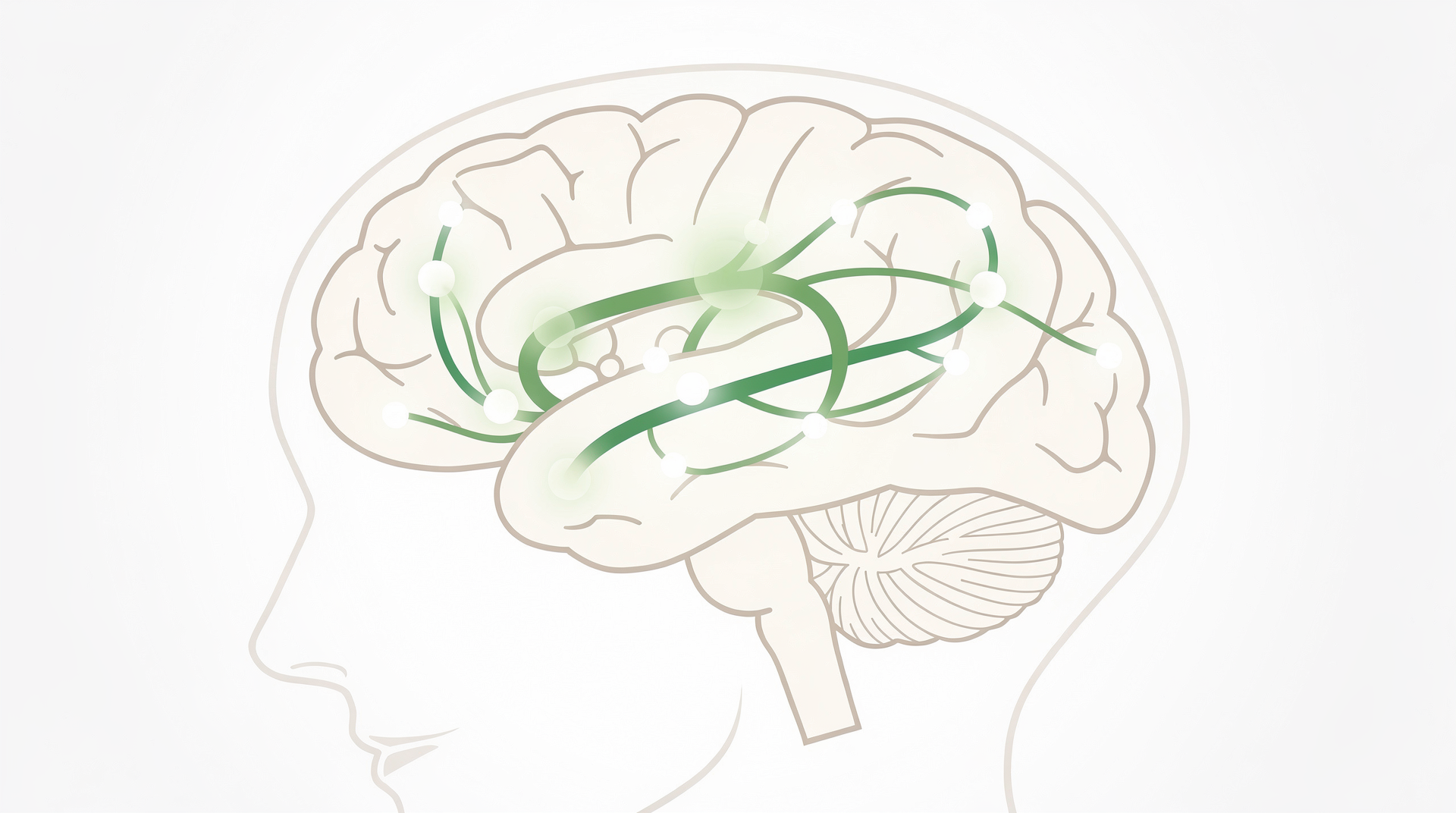
This “alarm system” in our brain is managed by the amygdala. It’s an ancient structure whose job is to scan the world for threats and sound the alarm if it finds one. The problem is, the amygdala isn’t evolutionarily designed for the complexities of the modern world. For the amygdala, there’s no difference between an angry mammoth and an email from your boss with the subject line “URGENT!!!”. The reaction is the same: initiate survival mode.
This activates the sympathetic branch of the autonomic nervous system — our internal “gas pedal.” Your heart starts beating faster, your muscles tense up, and stress hormones flood your bloodstream. You are ready to run or fight. But you’re just sitting at your desk. There’s nowhere to run and no one to fight. The tension remains, like holding a heavy barbell at arm’s length for hours. body is mobilized for an action that never comes.
When these “false alarms” happen dozens of times a day, the nervous system can’t return to a state of safety. This happens because the constant danger signals overwhelm the recovery buffer — the mechanism responsible for deactivating the alarm. In theory, after a threat passes, the opposite mode should engage: the parasympathetic branch, our “brake.” It’s responsible for rest, digestion, and repair. But when the false alarms come one after another, the brake simply fails to engage. You try to rest, but the engine keeps revving at maximum RPM, burning through fuel like a car that’s floored in neutral.
"Productive" Stress: Why We Get Hooked on the Cortisol Rollercoaster
“Just get it together.” “I just need to push through and get it done.” We often tell ourselves these things when a deadline is looming. And here’s the interesting part: it works. But not in the way we think.
In response to a perceived threat, the brain releases adrenaline and cortisol — hormones that mobilize all the body’s energy. You feel a surge of power, your focus sharpens, and you can truly move mountains — finish a project, survive a difficult conversation, or do something that seemed impossible. For a moment, it feels like a superpower.
But it’s like taking out a loan at a massive interest rate. Today, you get the cash you need to solve the problem, but tomorrow you have to pay it all back, with interest. Constant stimulation by cortisol creates a biochemical dependency. The brain gets used to it: this “doping” is required to get things done. A relaxed, calm state starts to feel “unproductive” or even lazy.
You might start thinking, “What’s wrong with me? Why can’t I just relax?” This can lead to guilt about resting, with a voice in your head saying, “I’m just sitting here doing nothing while everything is falling apart!” This is not your fault and not a character flaw. It’s a biochemical trap that years of high-alert living have backed you into.
Chronically high cortisol levels suppress the immune system, disrupt sleep, contribute to weight gain, and lead to the state we call burnout. Here’s how it works: cortisol mobilizes energy, but that energy doesn’t come from thin air. It comes from adenosine triphosphate (ATP) — the universal “fuel” for our cells. When the body is constantly in emergency-spending mode, the ATP reserves in our mitochondria (the cell’s power plants) get depleted. The body starts to “eat itself,” taking resources meant for long-term health to ensure short-term “efficiency.” You end up in a paradox: the more tired you are, the harder it is to truly rest, because nervous system has forgotten how to turn off the emergency mode.
Junk Dopamine: Why TV Shows and Social Media Don't Help You Rest
So, you feel drained and decide to “relax” by turning on a TV series, opening social media, or launching a game. An hour passes, then two, then three… The tension seems to have faded, but you don’t have any more energy. In fact, you feel even more drained and apathetic. Worse, after this kind of “rest,” you often wake up in the middle of the night with a racing heart or spend the next day in a fog. Why does this happen?
Imagine you’re starving, and instead of a nutritious meal, you eat a bag of chips and a soda. Your hunger might subside for a while, but body gets no protein, vitamins, or minerals. Roughly the same thing happens to nervous system when you try to “rest” with digital entertainment. This is not rest; it’s a distraction. It’s not resource recovery; it’s temporary escapism that leaves you with no real peace.
All these activities are easy sources of dopamine. Contrary to popular myth, dopamine is not the “pleasure hormone” that makes you feel blissful. It’s the “motivation hormone” that makes us want, seek, and anticipate. Scrolling your feed, waiting for the next episode, or beating a level in a game all fuel the dopamine system, keeping brain in a state of engagement and anticipation. This is the exact opposite of a relaxed state.
Think of relaxation as a room with steady, calm lighting. Digital entertainment, on the other hand, is a strobe light, forcing your pupils to constantly constrict and dilate. The brain interprets this flashing as a signal: “Something might happen, stay alert!” This doesn’t turn off threat mode; it just shifts your attention from one perceived threat to another.
True rest happens when the parasympathetic nervous system is activated. It’s when brain isn’t looking for new stimulation but is busy with “internal housekeeping”: processing the day’s information, replenishing serotonin (a key neurotransmitter for mood stability and healthy sleep), and repairing micro-damage in cells. This happens during deep sleep, meditation, quiet walks, and any activity where you are not receiving new stimuli.
Digital noise and a constant stream of information block this recovery process. You’re not resting; you’re just swapping one type of load (work stress) for another (information overload). In the end, the brain never gets the “all-clear” signal, and the parasympathetic system remains switched off.
What is Chronic Stress and Why is it Dangerous?
Chronic stress is a state where body is constantly in “fight or flight” mode due to unrelenting psychological pressures. It’s not one difficult event that you recover from. It’s a mode that becomes your new normal.
When the brain repeatedly receives “danger!” signals, it has to keep all systems on high alert, ready for a fight. Unlike acute stress, which passes quickly and allows the body to recover, chronic stress offers no such break. It’s like constantly redlining a car engine: it wears out without a chance to cool down and rest.
This state exhausts nervous system. Persistently high cortisol levels disrupt your immune function, cause “brain fog,” and create difficulties with memory and concentration. You’re always tired but can never truly relax because your adaptation system, instead of protecting you, starts to break you down.
This is not just about “working too much” — it’s a deep imbalance. It affects everything, from your cells’ basic energy production to your ability to enjoy life and build relationships. You might notice:
- At work: Making mistakes on familiar tasks, difficulty with decision-making, procrastinating on some things while looking busy with others.
- In body: Headaches, digestive issues, muscle tension, a racing heart, sleep problems.
- In your emotions: Irritability, snapping at loved ones, apathy, a sense of hopelessness.
- In your relationships: Withdrawing from people, fighting over small things, losing interest in shared activities.
In the early stages, this condition is reversible — the body can still recover if you give it a chance. But the longer you stay in this state, the more deeply the wrong patterns become ingrained, and the harder it becomes to retrain nervous system.
What You Can Do Today to Help Yourself
When to See a Professional
Self-help is important, but there are times when our internal regulatory mechanisms are so out of whack that they can’t be fixed without outside help. When brain can’t switch on the parasympathetic system by itself, reality demands intervention—like a broken leg that won’t heal on its own if you keep trying to walk on it.
Consider booking a consultation if you recognize yourself in these points:
- Tension has become the constant background noise of your life, and you can’t remember the last time you felt truly relaxed.
- Holidays and weekends don’t bring relief, and sleep doesn’t restore your energy (you wake up already tired).
- You’ve become irritable, frequently snap at loved ones, and every little thing throws you off balance.
- Physical symptoms have appeared: headaches, digestive issues, muscle tension, or a racing heart.
- Anxiety makes it hard to fall asleep or causes you to wake up in the middle of the night with your heart pounding.
In a consultation, we won’t just teach you to “think positive” — that’s not what’s needed here. We will figure out what specific triggers and life patterns are holding nervous system hostage. We will find personalized tools to help it recalibrate and regain its ability to self-regulate. Sometimes, you just need someone on the outside to show you where the “off” switch is and how to use it.
You can book an online consultation or an in-person session in Tallinn. If you feel you are in an acute crisis and need immediate help, please use the resources for emergency psychological care in Estonia.
Frequently Asked Questions
Why do I feel guilty when I rest?
This is not an innate feeling but a deeply ingrained belief that brain has learned to apply. It’s often tied to sociocultural attitudes where our value is measured by our productivity, and “doing nothing” is equated with laziness or worthlessness. Think of phrases you heard growing up, like “work before play” or “time is money.” brain has memorized these associations and now perceives any moment of rest as a failure or even a threat to your self-worth. This is a cognitive distortion, not an objective reality. In therapy, we work to separate your identity from your productivity, allowing you to rest without an internal judge.
Could constant tension be a symptom of something more serious?
Yes. While it’s often a result of chronic stress and lifestyle, an inability to relax can be a key symptom of Generalized Anxiety Disorder (GAD), depression, or clinical burnout. If this state is persistent and significantly interferes with your life, it is important to get a diagnosis from a specialist to rule out or confirm a disorder and find the right treatment.
I exercise, but I still can't relax. Why?
Intense exercise is also a stressor for the body (a positive one, but a stressor nonetheless) that activates the sympathetic nervous system. While sport helps release pent-up tension through physical exertion, deep relaxation requires other practices aimed at activating the “brake” — the parasympathetic system. Add stretching, yoga, meditation, or just calm walks in nature to your routine. It’s as if you’re only ever hitting the gas pedal but never truly using the brakes.
How long does it take to learn to truly relax?
Relaxation is a skill. You might feel the first noticeable improvements from breathing exercises or grounding techniques within 1–2 weeks of regular practice. However, rewiring a nervous system with deeply ingrained stress responses can take several months to a year of conscious work, often with the support of a psychologist. This is normal — nervous system spent years learning to be on high alert, and learning a new way of being also takes time.
The information in this article is for general informational purposes only and does not constitute professional medical or psychological diagnosis. If you are experiencing severe tension, anxiety, or other symptoms that interfere with your daily life, please consult a specialist.