
Burnout
When mom oversteps: how to set boundaries without war or guilt
She calls for no reason, advises how to raise your kids, comments on your partner, gets hurt if you don’t reply right away. After the talk — anger, then an hour later — guilt: «she’s my mother». When mom oversteps into your life, it feels like you only have two options: endure or blow up. There’s a third path — boundaries without war. Not because mom is «bad», but because you both slip into old scripts.
We’ll look at what happens in the brain, how to tell care from control, and what to do this week. Related: repeating family conflicts and mutual grievances.

Contents
Key points
This is you if…
- mom calls or texts several times a day and expects an instant reply;
- gives unsolicited advice on kids, money, appearance, work, your partner;
- shows up unannounced or «drops by briefly» for half a day;
- gets hurt by «distance»: «I only wanted the best for you»;
- you tense up before her visit or call;
- your partner asks you to set a boundary — and you can’t, afraid of hurting her.
If three or more fit — it’s not «you’re ungrateful». It’s that boundaries between your adult life and her parent role are blurred. And that can change.
Why mom won't let go when you're already an adult
Outwardly you’re an adult with a job, maybe a family and a mortgage. Inside her reactions, an old program often fires: «my child is in danger if I don’t control things». Picture a GPS still routing you to school when you’ve long been driving to work across town. The map wasn’t updated — not because the GPS is broken, but because nobody recalculated the route.
Mom often switches on the rational instinct — an ancient «protect offspring» mechanism. For her nervous system, letting go equals risk. Plus the «needed mom» role gives a dopamine hit: I’m useful, I’m in the loop, they can’t manage without me. That’s not pure manipulation — it’s an attachment script that once helped you survive and now blocks separate living.
The adult child runs a parallel script. As a kid, mom’s approval meant safety: praise felt good, anger felt scary. The amygdala learned: conflict with the main adult = threat to the bond. So now, when you try to say «no», your body reacts as if survival is at stake — though objectively you’re just postponing a call until evening.
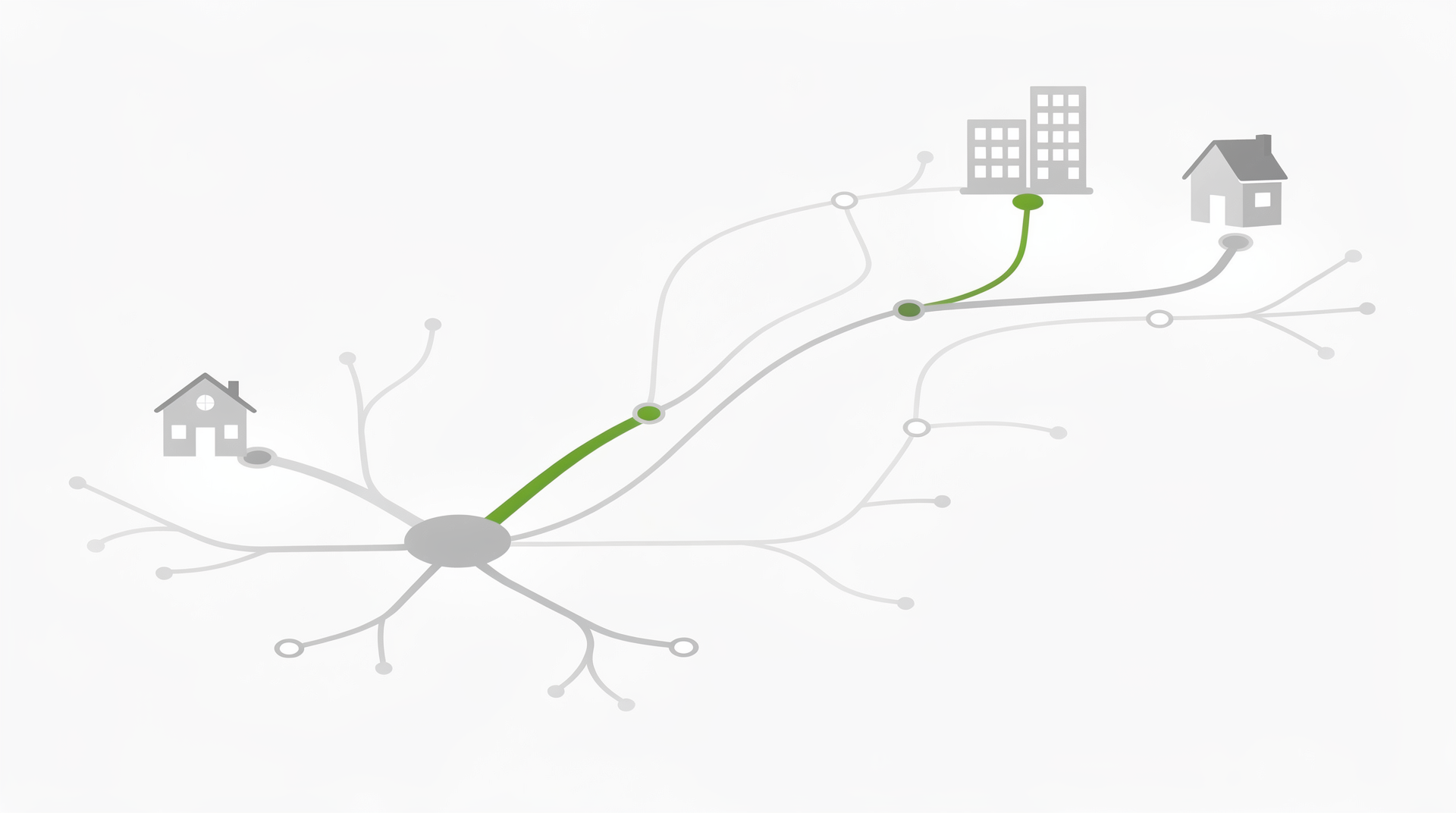
Hence the loop: mom ramps up control → you retreat or explode → she sulks or doubles down → you feel guilty and open the door again. It resembles a repeating family script, except the core axis is «parent — adult child» asymmetry.
This isn't necessarily a «toxic mother»
The internet loves labels: narcissist, toxic, energy vampire. Convenient — blame «her character» and change nothing. In practice you often see someone who sincerely believes that without their control, loved ones will suffer. Not a villain — just a world model that didn’t update.
Many moms grew up where love meant intervening: «I know better», «I only wanted what’s best». Their brain wasn’t taught to let go — it was taught to hold on. When you set a boundary, she may hear not «I need space» but «you’re not needed» — and defense kicks in: hurt, pressure, tears, guilt.
That doesn’t mean boundaries are off limits. It means the goal isn’t to convince mom in one talk, but to show consistently: new rules are real, and relationship is still possible. Sometimes she adjusts over time. Sometimes not. Your right to a separate life doesn’t disappear either way.
Why do I get angry at mom and then feel guilty?
Because brake and gas run at once. Anger tries to protect the boundary: «stop intruding». Guilt is an old survival signal: «if mom is unhappy, the bond is at risk». Both feel real to the nervous system — so after a fight you feel like a «bad son or daughter».
Guilt helps when you actually caused harm. If you didn’t pick up during work hours or refused to parent her way — that’s not moral failure. It’s two scripts colliding. Guilt without real harm is often not conscience but a childhood habit.
Three scripts that show up most often
Not diagnoses — roles in one play, so you see the mechanism, not «fixed personality».
Controller. Checks, directs, criticises: «wrong outfit», «wrong way to feed the child». The brain protects the illusion: if I control — no catastrophe. Response to boundaries is often more control.
«I’m only helping». Advice, gifts with strings, «I bought it for you». Here the stake is being needed. Refusing advice feels like refusing her.
Victim. «After everything I did for you…», «you abandoned me». Defense against fear of rejection. You concede again — script reinforced: hurt worked.
Spot the script — half the work. Then don’t argue content (what to cook, how to dress the kid) — return to contact rules: when, about what, and in what format you communicate.
When mom steps into your relationship and parenting
The sharp version is a triangle: mom — you — partner. Mom criticises your spouse, bypasses you with the kids, you stay quiet «not to make it worse». Partner reads it as: you’re not on their side. Trust in the couple drops faster than ties with mom.
If kids are involved, the boundary isn’t «mom, you’re bad» but «parenting decisions are ours; discuss them with me, not with the child directly». One line with your partner beats a pretty phrase: if you say «no» but mom gets access again next day — child and mom’s brains see: the rule isn’t real.
When dialogue stalls, it helps to explore not «who’s right» but why you can’t hear each other — behind fights over grandma’s advice there’s often fear of losing closeness or authority.
Why «just say no» doesn't work
Three common traps. First — soft «fine» after the third call: her brain heard no boundary, just noise. Second — a twenty-minute explanation why you’re right: that’s debate, not a boundary. Third — words without follow-through: «don’t call mornings» — but you still answer.
A boundary works with three parts: fact («you call at 7 am»), rule («weekdays before 10 I don’t answer»), action («if you call — I decline and ring back evening»). Tone can stay calm. Consistency beats volume.
As a child’s brain learns — persistence sometimes opens the door — mom (often unconsciously) repeats what once worked. Your job isn’t winning the argument but stopping new concessions that feed the old script.
When to see a psychologist
Individual therapy makes sense if:
- you can’t recover for days after contact with mom;
- you can’t hold even one small boundary — you snap or cut off completely;
- mom uses threats, humiliation, financial or emotional control;
- fear of her reaction disrupts work, sleep, your relationship;
- anxiety, depression, or thoughts that «it’s easier alone» take over.
Family psychologist — when you, your partner, and mom are pulled in (or you only fight as a couple because of her). Mom doesn’t have to be in the room — what matters is a shared couple line and talking without blame. Threats, violence, suicidal thoughts — emergency help (112, 116 123).
What to do now
When family counselling helps
If mom’s intrusion turns you and your partner into «it’s all because of her» fights — often the issue isn’t mother-in-law alone but no shared script for protecting boundaries. Counselling can work through concrete phrases, roles, and fears — without hunting for a villain.
Book a family session · 90 minutes · in person or online. If mom’s role sits inside a wider knot of grievances, see also mutual grievances in the family.
FAQ
How do I tell mom she oversteps without a fight?
Short, no character attacks: you value her + one concrete rule. «Mom, I love you. Parenting advice — only when I ask. I’m not asking now». Don’t expect instant agreement — what matters is you don’t roll back the rule after she sulks. Fights often grow from long explanations, not from the «no» itself.
Is it OK to limit contact with mom?
Yes, if otherwise you, your partner, or kids suffer. Limiting isn’t a life sentence — it’s making contact safer. Some families find rare meetings with rules; some need years of distance. That doesn’t make you a «bad child» if you’re protecting yourself, not punishing.
Mom gets hurt by any boundary — what then?
Hurt is her way to restore the old script. You can empathise («I see this is hard») without cancelling the rule. Your job isn’t to erase her pain at any cost but to stop reinforcing intrusion with concessions. If hurt turns to threats or pressure — specialist, not endless apologies.
When is it beyond «boundaries» into toxicity?
Humiliation, money control, threats, entering your space despite a clear «no», trying to break your couple, emotional blackmail through kids. Then «soft» boundaries aren’t enough — psychologist support and sometimes legal or crisis help.